Anatomy and Physiology
2027 season
On this page(9 sections)
Subsections
Anatomy and Physiology asks you to explain how the body's parts work together, name structures in a figure, and apply both to a short case. For 2027 the event covers three systems in both divisions: the respiratory, digestive and immune systems. Two things make it hard. The disease lists are long and change by level and division, and questions switch quickly between recognition (label this structure), mechanism (why does this happen) and clinical reasoning (these findings point to what). The strongest teams build one compact mental map per system, then practice the links between them: the gut lining is the body's largest immune surface, the lungs defend themselves with mucus, cilia and alveolar macrophages, and asthma and celiac disease are both airway or gut problems driven by the immune system.
This overview covers the whole event: the format, what the 2027 rules ask for at each level, what changed from last season, how tournaments test the material, how to split the work, and where to go for depth. Each system has its own guide, linked from the scope section.
Event format
| Rule | Detail |
|---|---|
| Team size | Up to 2 students |
| Time | About 50 minutes |
| Format | A written test, or a series of lab-practical stations (experiments, apparatus, models, illustrations, specimens, data to analyze, problems to solve). The tournament chooses, so prepare for both |
| Calculators | Up to two Class II calculators per team (non-programmable, non-graphing scientific models; a simpler Class I calculator is also fine) |
| Notes | One 8.5 × 11 in sheet per team, both sides, any content from any source. It may be laminated or sleeved. Affixed labels and extra sheets are not allowed, even inside one sleeve |
| Scoring | High score wins. Preselected questions break ties |
The format is identical for Division B and Division C, and nothing is built or impounded. The one-sheet rule is the practical constraint: one page has to hold three systems, so it should carry the things you cannot rebuild from understanding, such as disease lists by level, lung-volume definitions and enzyme tables.
What the rules cover
Both 2027 rules manuals organize the event into three content areas: respiratory system, digestive system and immune system, in that order (section 3a, 3b and 3c). Division B has two tiers: items for every level, and items marked State & National only. Division C adds a third tier, National only, in every system, and it uses many closed "limited to" lists. Read the tier markers carefully, because several topics sit at different levels in the two divisions.
Respiratory system
| Level | Division B | Division C |
|---|---|---|
| All levels | Anatomy and functions; mechanisms and measures of ventilation; patterns of breathing; reading a spirogram; gas exchange, O₂ transport and dissociation curves; effects of exercise and altitude; COPD, asthma, emphysema, pneumonia, sleep apnea, cystic fibrosis | Same core at macroscopic and cellular levels, plus breathing mechanics (pressure gradients, compliance, elastic recoil, airway resistance), the walls of each airway segment compared, quantitative lung volumes and capacities, flow-volume loops, and obstructive versus restrictive patterns |
| State & National | Tuberculosis, pulmonary edema, pleurisy, small-cell and non-small-cell lung cancer, pulmonary fibrosis, pneumoconiosis (silicosis, coal worker's lung, asbestosis); blood chemistry and the control of breathing; treatment and prevention of every listed disorder | Control of breathing (respiratory centers, chemoreceptors, blood chemistry, rhythm); tuberculosis, pulmonary edema, pleurisy, pulmonary fibrosis, and pneumoconiosis limited to the same three types |
| National only | (no separate tier) | ARDS, infant respiratory distress syndrome, pulmonary hypoplasia, both lung-cancer types; prevention, diagnosis and treatment for all listed disorders |
Digestive system
| Level | Division B | Division C |
|---|---|---|
| All levels | Anatomy of the alimentary canal and accessory organs; the four wall layers; linings of the esophagus, stomach, small and large intestine compared; mechanical versus chemical digestion; digestion of proteins, fats and carbohydrates; exercise and obesity; stomach and duodenal ulcers, digestive cancers, diarrhea, lactose intolerance, hepatitis, appendicitis | All of B's anatomy and digestion items, plus abdominal-wall layers, intraperitoneal versus retroperitoneal organs, motility and its control by hormones and the enteric nervous system, and absorption of nutrients, vitamins, minerals and water (including fiber). Disorders: GERD, peptic ulcer disease, lactose intolerance, ulcerative colitis, Crohn's, celiac, appendicitis, and diverticular disease limited to a closed list of named forms (diverticulosis, the diverticulitis variants and related conditions) |
| State & National | Diverticular disease, GERD, peptic ulcer disease, ulcerative colitis, Crohn's, celiac; liver and pancreas function including Kupffer cells; treatment and prevention of every listed disease | Cellular organization of the liver and pancreas, glucose homeostasis and cholesterol balance (HDL, LDL); metabolic syndrome and six named toxins (acetaminophen, anabolic steroids, alcohol, heavy metals, bisphenols, PCBs); gut microbes; pancreatitis, MASLD, cirrhosis, hepatitis, and colorectal, gastric and hepatic cancers |
| National only | (no separate tier) | Achalasia and Hirschsprung disease; cholecystitis and seven biliary disorders; esophageal, pancreatic and neuroendocrine cancers; prevention, diagnosis and treatment for all listed disorders |
Immune system
| Level | Division B | Division C |
|---|---|---|
| All levels | Immune organs (bone marrow, thymus, spleen, lymph nodes, skin); innate immunity (barriers, complement, Toll-like receptors, inflammation, innate cells); adaptive immunity; the immune response and allergic reactions; HIV/AIDS, CVID, SCID; MS, rheumatoid arthritis, Hashimoto's, Graves'; type 1-4 hypersensitivities (anaphylaxis, urticaria, myasthenia gravis, Arthus reaction, serum sickness, contact dermatitis) | The same organs and innate list plus antimicrobial proteins and fever; adaptive detail (antigen recognition, maturation, selection, tolerance, presentation, activation, memory); integration of innate and adaptive responses; active versus passive immunity and immunization; the five antibody classes. Disorders as in B, plus Sjögren's syndrome, and asthma and celiac disease as hypersensitivity examples |
| State & National | Organ transplants and preventing rejection (allograft, autograft); cancer immunotherapies (antibodies, CAR-T); SLE, dermatomyositis, scleroderma, psoriasis and psoriatic arthritis; treatment and prevention of every listed disorder | Signaling molecules and pathways (cytokines, interferons, JAK-STAT, cGAS-STING); antibody constant-region variation and IgG and IgA subclasses; transplant types, hyperacute, acute and chronic rejection, preventing rejection, and graft-versus-host disease; type 1 diabetes, SLE, dermatomyositis, scleroderma, psoriasis, psoriatic arthritis, erythroblastosis fetalis; six named immunodeficiencies (DiGeorge, Bruton's, Job's, Bloom's, Wiskott-Aldrich, MHC class I and II deficiency) |
| National only | (no separate tier) | Tumor immunology and immunotherapies (therapeutic vaccines, cytokines, antibodies, CAR-T); vaccine routes and adjuvants; immunological imprinting and antibody-dependent enhancement; four leukemias, severe congenital and cyclic neutropenia, superantigen diseases (staph food poisoning, toxic shock syndrome); prevention, diagnosis and treatment for all listed disorders |
Each system has a full guide: Respiratory system, Digestive system and Immune system. They go through every rules item with disorder tables, figures and quizzes.
What changed from last season
Last season's event covered the nervous system, special senses and endocrine system. None of that is in the 2027 rules, so do not spend study time on it except where it touches the three current systems (the enteric nervous system and gut hormones in Division C, and the chemoreceptor control of breathing at State).
The respiratory, digestive and immune systems were last tested together in 2017-18 and 2022-23, and the 2027 outline keeps most of the all-levels items from those seasons. The new material sits mainly in the upper tiers, especially in Division C: abdominal-wall layers and peritoneal relationships at every level, liver and pancreas cell biology, toxins and metabolic syndrome, gut microbes, immune signaling pathways, antibody subclasses, graft-versus-host disease, and a long National-only list of biliary, motility and blood-cell disorders. Older practice tests are therefore a good match for all-levels content but will undershoot State and National tests in Division C.
Core content and how to study it
Respiratory system
Air enters through the nose, where it is filtered, warmed and humidified, then passes through the pharynx, larynx and trachea into the bronchial tree. The airways divide about 23 times; the first 16 or so generations only conduct air (the anatomical dead space), and gas exchange happens in the respiratory bronchioles, alveolar ducts and alveoli. As you go down the tree, cartilage disappears, smooth muscle takes over and the epithelium thins from ciliated pseudostratified columnar to the flat type I cells of the alveolus. Division C asks you to compare those walls directly.

Ventilation is driven by pressure. The diaphragm contracts and flattens, the thorax enlarges, alveolar pressure falls below atmospheric pressure and air flows in (Boyle's law). Quiet expiration is passive: elastic recoil of the lung and chest wall pushes air back out. A spirogram records these volumes over time, and most calculation questions in the event come from it.
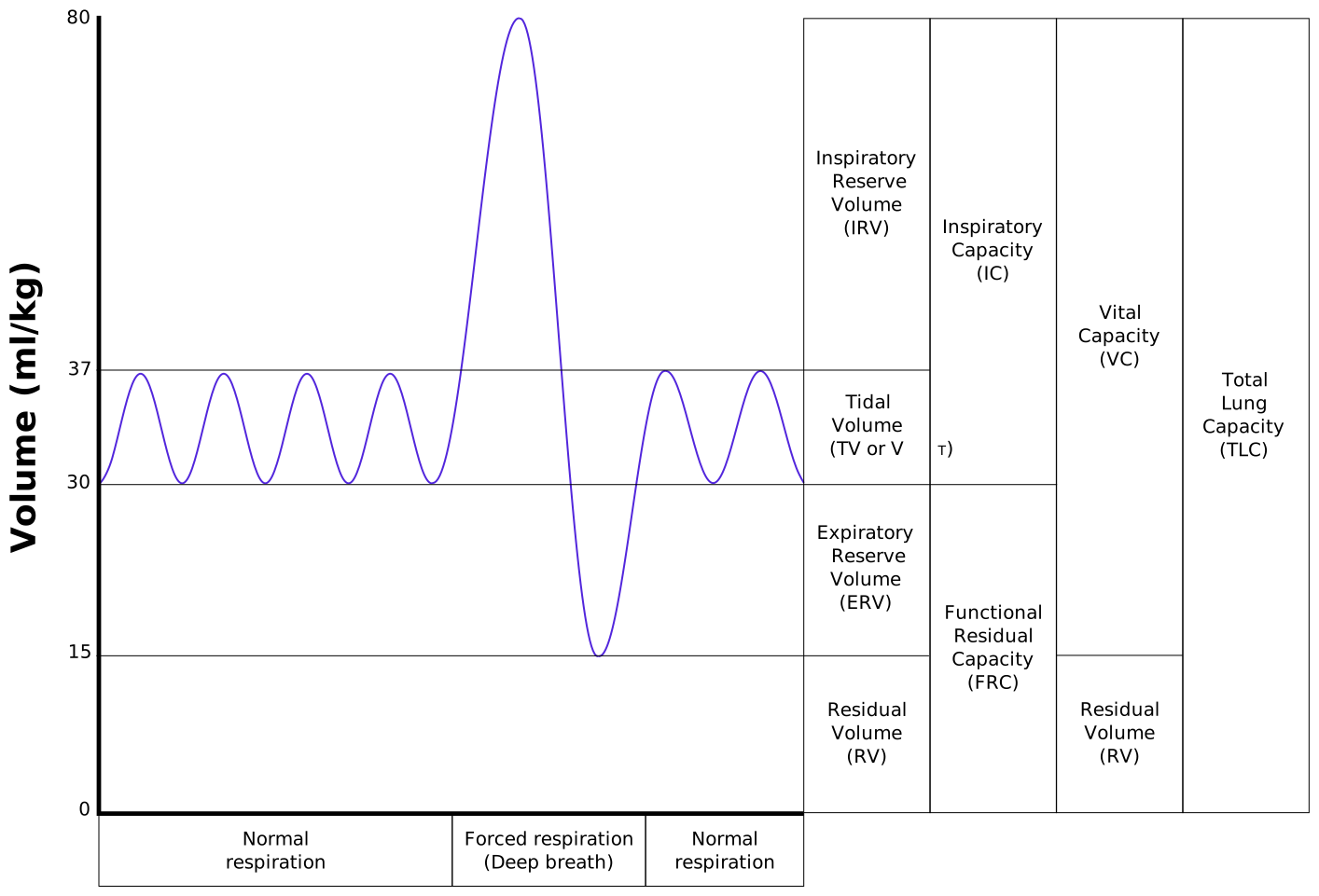
Oxygen crosses the alveolar wall by diffusion and is carried almost entirely bound to hemoglobin. The oxygen-hemoglobin dissociation curve is S-shaped because binding is cooperative. Higher CO₂, acidity, temperature or 2,3-BPG shift it right, which unloads more O₂ in working tissue; the shift caused by CO₂ and acid is the Bohr effect. CO₂ travels mostly as bicarbonate, and deoxygenated hemoglobin carries more CO₂ (the Haldane effect). The obstructive diseases (asthma, COPD, emphysema) lower the FEV₁/FVC ratio, while restrictive diseases (fibrosis, pneumoconiosis) reduce total lung capacity with a normal or high ratio.
Digestive system
The alimentary canal runs from the mouth to the anus, with the salivary glands, liver, gallbladder and pancreas emptying into it. Its wall has the same four layers along its length (mucosa, submucosa, muscularis externa, serosa or adventitia), but the mucosa changes with the job: stratified squamous epithelium in the esophagus resists abrasion, the stomach's simple columnar lining secretes mucus, acid and pepsinogen, the small intestine's villi and microvilli maximize absorption, and the large intestine has no villi but many goblet cells.

Mechanical digestion breaks food into smaller pieces (chewing, gastric churning, segmentation); chemical digestion breaks bonds with enzymes. Carbohydrate digestion starts with salivary amylase and finishes with brush-border enzymes such as lactase and sucrase. Protein digestion starts with pepsin in the stomach and continues with pancreatic trypsin and chymotrypsin. Fat digestion depends on bile salts from the liver, which emulsify fat so pancreatic lipase can reach it. At State and National, the liver's role widens to Kupffer cells (resident macrophages that clean portal blood) and, in Division C, to glucose and cholesterol regulation and the injury caused by the listed toxins.
Immune system
The immune system has two arms that work together. Innate immunity responds within minutes to hours and does not improve with repeat exposure: skin and mucous membranes, complement, Toll-like receptors that recognize common microbial patterns, inflammation, fever, and cells such as neutrophils, macrophages and natural killer cells. Adaptive immunity takes days the first time but remembers: B cells make antibodies, helper (CD4) T cells coordinate, and cytotoxic (CD8) T cells kill infected cells that display foreign peptides on MHC class I.

The disorder lists sort into three groups, and sorting is often the question. Immunodeficiencies are too little response (HIV destroys CD4 cells; SCID removes both B and T function). Autoimmune diseases are a response against self (Graves' antibodies stimulate the TSH receptor; Hashimoto's destroys the thyroid). Hypersensitivities are an excessive response, classified by mechanism: type I is IgE and mast cells (anaphylaxis, urticaria), type II is antibody against a cell or receptor (myasthenia gravis), type III is immune-complex deposition (Arthus reaction, serum sickness), and type IV is T-cell mediated and delayed (contact dermatitis).
Common pitfalls
How tournaments test this
Because the 2027 systems are the same three that were tested in 2017-18 and 2022-23, the archive matches the current scope closely. Our archive holds 5,071 Anatomy and Physiology questions from those seasons: 2,766 from 2017-18 and 2,305 from 2022-23. Division C accounts for 3,473, Division B for 1,467, and 131 are tagged for both. The practice bank holds 10,040 more.
- Topic weight. The largest archive tags are immunity (864), intestines (787), white blood cells (625), breathing (606), stomach (488), pathology (485) and gas exchange (460), followed by antibodies, lungs, airways and liver. The immune system is the single largest area, but digestive tags together (intestines, stomach, liver, mouth, pancreas) outnumber it.
- Format. About 45% free response, 45% multiple choice, 5% select-all and 5% true/false, with a handful of numeric and matching items.
- Task shape. About 11% of prompts are "which of the following" items. Explain-why prompts make up 5.2%, identify-a-structure-in-a-figure 4.2%, case scenarios 3.7%, definitions 2%, and compare-and-contrast 1.3%. Calculations and graph or table interpretation are each under 1%, but those few items are almost always spirogram, lung-volume or dissociation-curve questions.
- Answers that come back. The most frequent correct answers include alveoli, liver, IgE, emphysema, neutrophils, small intestine, stomach, helper T cells, IgG, asthma, macrophages and IgA. Know each one's structure, function and the disorders attached to it.
- Typical case shapes. A patient with a genetic enzyme deficiency and a lung finding (α₁-antitrypsin deficiency and emphysema), a drug with a side effect on the stomach lining (NSAIDs and ulcers), or maternal antibodies crossing the placenta. The question asks for the mechanism or the most likely diagnosis.
Strategy
- Split by system, then overlap. One partner owns respiratory and digestive anatomy and physiology; the other owns the immune system and the disorder lists for all three. Both partners should know the immune links in the other systems (gut-associated lymphoid tissue, celiac disease, asthma).
- Build the sheet around the rules lists. Put each system's disorders in the order and tier your division lists them, with one line for mechanism and one for the key finding. Add the spirogram definitions, the dissociation-curve shifts, the digestive enzyme table and the four hypersensitivity types.
- Practice from blank diagrams. Lab-practical stations use models and unlabeled figures of the airways, the digestive tract, the gut wall layers and lymphoid organs. Rebuild each figure from memory every few days.
- Write one-line mechanisms. When a question asks why, give cause, effect and the result you see in one sentence.
- Skim first. Identification and definition items are quick points; leave multi-step cases and calculations until the easy items are done.
Test yourself
These are real questions from public tournament tests in our archive, all inside the 2027 scope. Each key was re-checked against the mechanisms above. Click an answer to check it; each links to the full test.
- 1
The lamnia Propria forms part of Submucosa
Practice more Anatomy and Physiology questions →
References and further reading
- Science Olympiad, Anatomy and Physiology event page and the 2027 Division B and C rules manuals (the authoritative scope): https://www.soinc.org
- OpenStax, Anatomy and Physiology 2e (respiratory, digestive and immune system chapters): https://openstax.org/books/anatomy-and-physiology-2e/pages/1-introduction
- National Heart, Lung, and Blood Institute, lung diseases: https://www.nhlbi.nih.gov/health/lung-diseases
- National Institute of Diabetes and Digestive and Kidney Diseases, digestive diseases: https://www.niddk.nih.gov/health-information/digestive-diseases
- National Institute of Allergy and Infectious Diseases, immune system and disorders: https://www.niaid.nih.gov/research/immune-system-overview
- MedlinePlus, disease and lab test background: https://medlineplus.gov/
- SciOly Wiki, Anatomy and Physiology (another summary of the event): https://scioly.org/wiki/index.php/Anatomy_and_Physiology
- Practice more: the Scio.ly test archive has public Anatomy and Physiology tests from 2017-18 and 2022-23, the last two seasons with this system rotation.
Official references
Sample notesheet
Download a printable, rule-compliant sample notesheet. Customize with your notes.