Anatomy and Physiology - Respiratory System
On this page(14 sections)
The respiratory system moves air in and out of the lungs (ventilation), moves gases between that air and the blood (external respiration), and sets how much oxygen the blood can carry to the tissues. It is one of the three systems in the 2027 Anatomy & Physiology rotation, alongside the digestive and immune systems. Almost every respiratory question comes down to three ideas: airflow follows pressure differences created by the chest wall and diaphragm, gases move down partial-pressure gradients, and hemoglobin's grip on O₂ changes with CO₂, pH and temperature. Learn those three and the lung volumes, the breathing patterns, the altitude questions and the disorders become bookkeeping.
What the rules cover
The 2027 rules manual tests the anatomy and physiology of the respiratory, digestive and immune systems in both divisions. Teams have up to 2 members and about 50 minutes. Each team may bring writing utensils, up to two Class II calculators and one 8.5 × 11 inch sheet of paper with notes on both sides in any form; the sheet may be laminated or in a sheet protector, but affixed labels and extra sheets are not allowed. The event is either a written test or a rotation of lab-practical stations (models, specimens, illustrations, data to analyze, problems to solve). The high score wins, and preselected questions break ties.
The respiratory outline is similar in the two divisions, but Division C is more quantitative and has a National-only tier. "Regional" below means every level, including invitationals.
| Topic | Division B | Division C |
|---|---|---|
| Anatomy and function of the respiratory system (C adds the cellular level) | Regional | Regional |
| Mechanics of breathing: pressure gradients, compliance, elastic recoil, airway resistance | Regional ("mechanisms of pulmonary ventilation") | Regional, named explicitly |
| Comparing the walls of pharynx, larynx, trachea, bronchi, bronchioles and alveoli | Not listed separately | Regional |
| Measures and patterns of breathing; reading a spirogram | Regional | Regional, quantitative, plus flow–volume loops and obstructive vs restrictive patterns |
| Gas exchange, O₂ transport and the O₂–hemoglobin dissociation curve | Regional | Regional, with diffusion principles |
| Effects of exercise and high altitude | Regional | Regional |
| Asthma, COPD, emphysema, pneumonia, sleep apnea, cystic fibrosis | Regional | Regional |
| Blood chemistry, respiratory rhythm, regulation and control | State & National | State & National (respiratory centers, chemoreceptors) |
| Tuberculosis, pulmonary edema, pleurisy, pulmonary fibrosis, pneumoconiosis (silicosis, coal worker's lung, asbestosis) | State & National | State & National |
| Small cell and non-small cell lung cancer | State & National | National only |
| ARDS, infant respiratory distress syndrome, pulmonary hypoplasia | Not listed | National only |
| Treatment and prevention of the listed disorders | State & National | National only (prevention, diagnosis and treatment) |
Note the reversal: lung cancer and treatments are State-level content in Division B but National-only in Division C. At a Division C State tournament you still need to recognize and explain every State-listed disorder, just not its prevention, diagnosis or treatment, which Division C saves for Nationals.
Anatomy of the airway
"Respiration" names several processes, and tests use the terms precisely. Pulmonary ventilation is moving air in and out (inspiration and expiration). External respiration is gas exchange between alveolar air and pulmonary capillary blood. Gas transport is carriage of O₂ and CO₂ in the blood. Internal respiration is exchange between systemic capillary blood and tissue cells. Cellular respiration is mitochondria using O₂ to make ATP.
Air takes a long, branching path: nose and nasal cavity → pharynx (nasopharynx, oropharynx, laryngopharynx) → larynx → trachea → two primary bronchi → lobar and segmental bronchi → bronchioles → terminal bronchioles → respiratory bronchioles → alveolar ducts → alveolar sacs → alveoli.

Conducting and respiratory zones
The conducting zone runs from the nose to the terminal bronchioles. It has no alveoli, so no gas exchange happens there; its jobs are to carry, warm, humidify and clean the air. The respiratory zone begins at the respiratory bronchioles, the first airways with alveoli budding from their walls, and includes the alveolar ducts, sacs and alveoli. The conducting zone is also the anatomic dead space: air that fills it never reaches an exchange surface.
Upper-airway landmarks. The nasal septum divides the nasal cavity, and the curled conchae (turbinates) create turbulence and surface area for warming and humidifying air. The hard palate separates the nasal cavity from the oral cavity; the soft palate closes off the nasopharynx during swallowing. The paranasal sinuses (frontal, ethmoid, sphenoid, maxillary) drain into the nasal cavity. The nasopharynx carries air only and holds the pharyngeal tonsil (adenoids) and the openings of the auditory tubes; the oropharynx (palatine tonsils) and laryngopharynx carry both air and food. In the larynx, the thyroid cartilage forms the "Adam's apple", the cricoid cartilage is the only complete ring, the epiglottis covers the entrance during swallowing, and the opening between the true vocal folds is the glottis.
The conducting airways defend the lungs with a mucociliary escalator. Goblet cells and submucosal glands make mucus that traps particles; cilia beat toward the pharynx, where the mucus is swallowed or coughed out. When it fails (smoking paralyzes cilia; thick mucus in cystic fibrosis cannot be moved), infections follow. Coughing, a forced expiration released against a briefly closed glottis, is the backup.
Comparing the airway walls
Division C lists this comparison explicitly; Division B does not, but its anatomy topic can still draw on the same micrographs. The trend from top to bottom is simple: epithelium gets thinner, cartilage disappears, smooth muscle becomes relatively more important, and glands vanish, until the alveolar wall is just a single flat cell layer.
| Structure | Epithelium | Cartilage | Muscle | Glands and goblet cells |
|---|---|---|---|---|
| Pharynx | Pseudostratified ciliated in the nasopharynx; nonkeratinized stratified squamous in the oro- and laryngopharynx | None | Skeletal (constrictor muscles) | Mucous glands |
| Larynx | Stratified squamous on the true vocal folds and epiglottis surface; pseudostratified ciliated elsewhere | Hyaline (thyroid, cricoid, arytenoids) and elastic (epiglottis) | Skeletal (intrinsic laryngeal muscles) | Present |
| Trachea | Pseudostratified ciliated columnar | 16–20 C-shaped hyaline rings, open side toward the esophagus | Trachealis smooth muscle closes the open side | Many goblet cells; seromucous glands in the submucosa |
| Bronchi | Pseudostratified ciliated columnar, shortening as they branch | Irregular hyaline plates | Continuous spiral smooth-muscle layer | Present, decreasing |
| Bronchioles | Simple ciliated columnar → simple cuboidal; club cells | None | Thick smooth muscle relative to wall size | None (few goblet cells only in larger ones) |
| Alveoli | Simple squamous type I cells plus cuboidal type II cells | None | None | None; alveolar macrophages patrol the surface |
Two consequences come up constantly. Because bronchioles have smooth muscle but no cartilage, they set airway diameter and are the airways that narrow in asthma: sympathetic input (through β₂ receptors) dilates them and parasympathetic input constricts them. Because the alveolar wall is simple squamous epithelium fused to the capillary endothelium, the respiratory membrane is only about 0.5 µm thick. Type I cells cover about 95% of the alveolar surface; type II cells secrete surfactant and can divide to replace type I cells.

The lungs and pleura
Each lung sits in its own pleural sac. The visceral pleura covers the lung surface, and the parietal pleura lines the chest wall, diaphragm and mediastinum. Between them is the pleural space, a thin film of fluid that makes the layers stick together by surface tension, so when the chest wall expands the lung follows. Air in the space (pneumothorax) or fluid (pleural effusion) breaks that link and the lung recoils. Inflamed pleura rubbing together cause the sharp pain of pleurisy.
The right lung has three lobes (upper, middle, lower) and the left lung two (upper, lower), with a cardiac notch for the heart. Each lung's hilum admits the bronchi, pulmonary vessels and nerves. The mediastinum between the pleural sacs holds the heart, great vessels, trachea, esophagus and thymus.
Mechanics of breathing
Air moves because of pressure differences, and the lungs have no muscle of their own. When the thoracic volume grows, alveolar pressure falls below atmospheric pressure and air flows in (Boyle's law: for a fixed amount of gas at constant temperature).
Inspiration at rest is active: the diaphragm contracts and flattens and the external intercostals lift the ribs. ↑ thoracic volume → ↑ lung volume → ↓ alveolar pressure (about −1 mmHg relative to the atmosphere) → air flows in. Deep breathing recruits accessory muscles (sternocleidomastoid, scalenes, pectoralis minor). Expiration at rest is passive: the muscles relax and elastic recoil of the lungs and chest wall returns them to resting size. Forced expiration adds the internal intercostals and abdominal muscles.
Intrapleural pressure stays negative during quiet breathing (about −4 mmHg at rest, more negative during inspiration) because the lung's recoil pulls inward while the chest wall springs outward; it turns positive only in forced expiration.
Compliance, elastic recoil and surfactant
Compliance is how easily the lungs stretch: . Elastic recoil is the opposite tendency, the lung's pull back toward a small volume, which comes from elastic fibers and from surface tension. Emphysema destroys elastic fibers, so compliance rises and recoil falls; air is easy to get in but hard to push out. Fibrosis does the reverse.
Surface tension in the alveoli would collapse them. By the Laplace relation, smaller alveoli need more pressure to stay open, so they would empty into larger ones. Type II cells secrete surfactant, which lowers surface tension most in small alveoli and evens out the pressures. Premature infants without enough surfactant develop infant respiratory distress syndrome (see Disorders).
Airway resistance
Airflow follows , and resistance in a tube scales with (Poiseuille). Halving an airway's radius raises its resistance 16-fold, which is why bronchoconstriction, mucus and inflammation matter so much. In healthy lungs the medium-sized bronchi contribute most resistance; the many small airways are in parallel, so together they add little. Resistance also falls as lung volume rises, because the surrounding tissue pulls airways open, and forced expiration can compress floppy airways, which limits flow in emphysema.
Lung volumes, spirometry and patterns of breathing
A spirogram plots lung volume against time as a person breathes into a spirometer. Reading one is a Regional skill in both divisions.
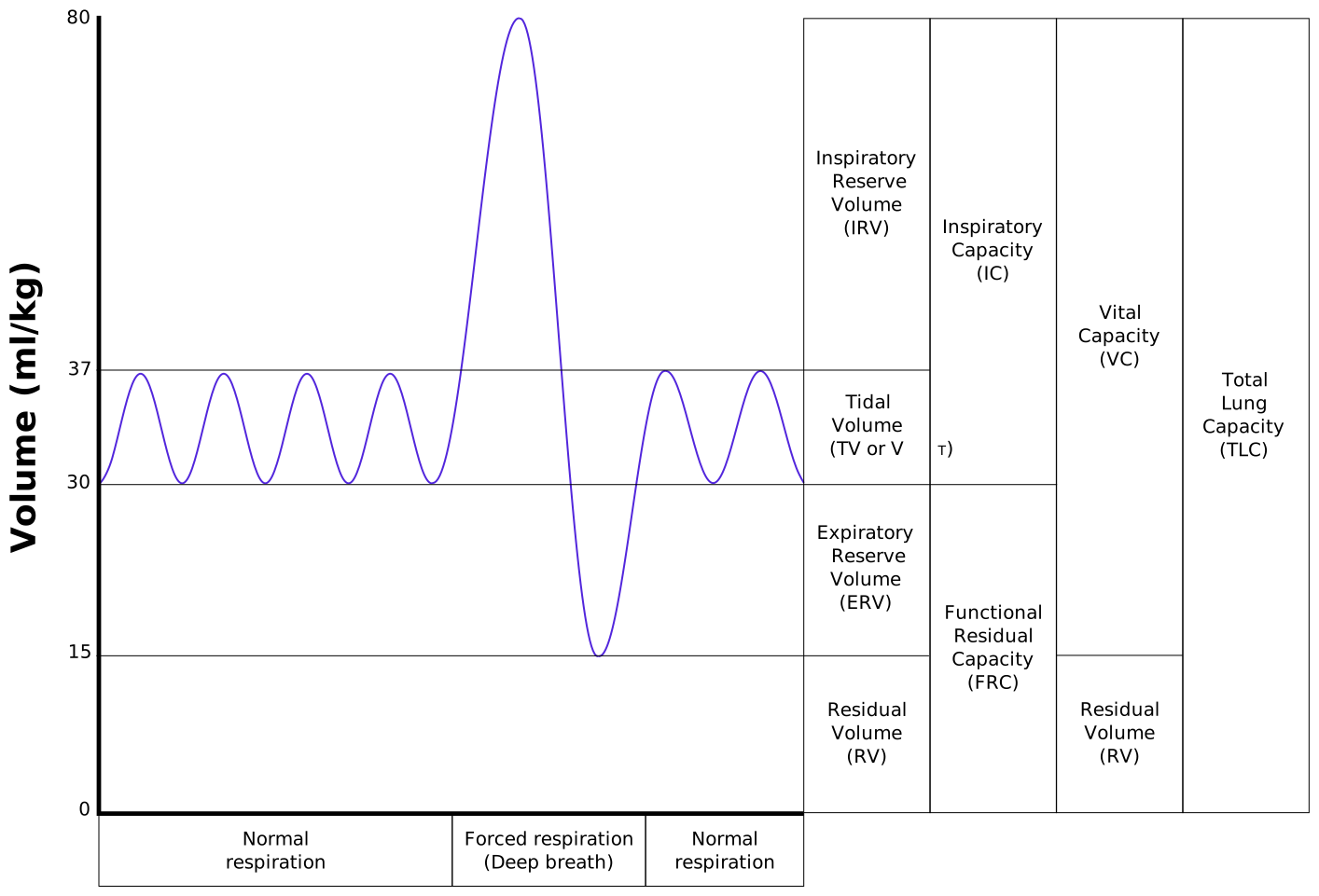
| Volume or capacity | Definition | Approximate adult value |
|---|---|---|
| Tidal volume (TV) | Air moved in one quiet breath | 500 mL |
| Inspiratory reserve volume (IRV) | Extra air inhaled after a normal inspiration | 3,000 mL |
| Expiratory reserve volume (ERV) | Extra air exhaled after a normal expiration | 1,100 mL |
| Residual volume (RV) | Air left after maximal exhalation | 1,200 mL |
| Vital capacity (VC) | IRV + TV + ERV | 4,600 mL |
| Inspiratory capacity (IC) | TV + IRV | 3,500 mL |
| Functional residual capacity (FRC) | ERV + RV | 2,300 mL |
| Total lung capacity (TLC) | VC + RV | 5,800 mL |
Textbook values differ by a few hundred milliliters with sex, height and age; use the relationships, not the exact numbers, unless a question gives its own.
What spirometry cannot measure. A spirometer records air that moves, so it gives VC and its parts. It cannot give RV, FRC or TLC, because residual air never leaves; those need gas dilution (helium or nitrogen washout) or body plethysmography.
Minute ventilation, alveolar ventilation and dead space
Only air that reaches the alveoli exchanges gas. Anatomic dead space (V_D) is about 150 mL in an adult (roughly 1 mL per pound of body weight). Physiologic dead space adds alveoli that are ventilated but not perfused.
Dead space can be measured from exhaled CO₂, because dead-space air contains none and dilutes the alveolar gas.
Flow–volume loops: obstructive versus restrictive
A flow–volume loop plots airflow against volume during a forced breath out and in. Division C names it and the obstructive/restrictive distinction at Regional level; Division B students who read spirograms will meet the same FEV₁ and FVC numbers.
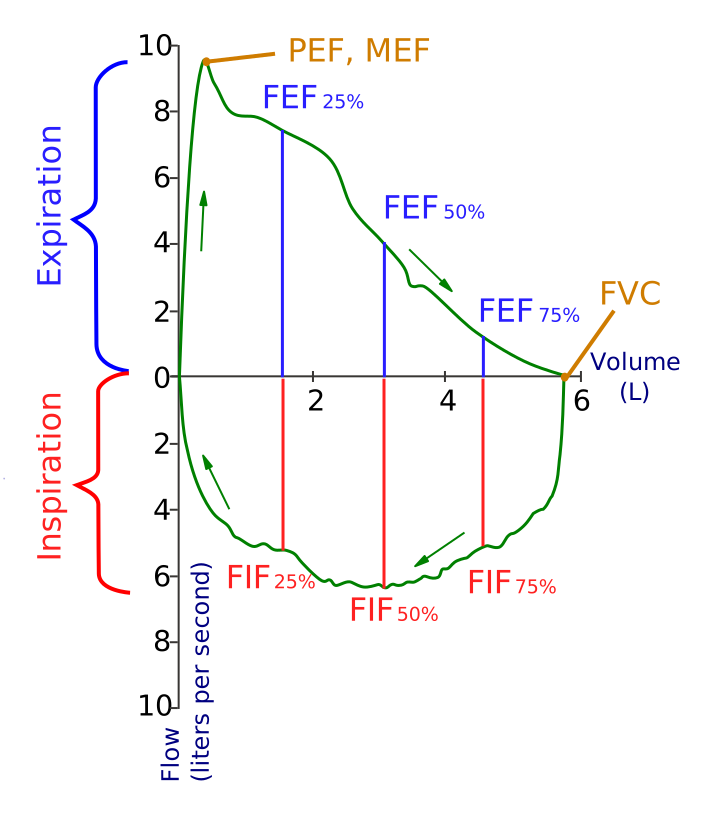
| Feature | Obstructive (asthma, COPD, CF) | Restrictive (fibrosis, pneumoconiosis, neuromuscular) |
|---|---|---|
| FEV₁ | Low | Low |
| FVC | Normal or low | Low |
| FEV₁/FVC | Low (below 0.70) | Normal or high |
| TLC, RV | High (air trapping, hyperinflation) | Low |
| Flow–volume loop | Scooped, concave expiratory limb | Small, narrow loop with normal shape |
| Diffusing capacity (DLCO) | Low in emphysema, normal in asthma | Low in fibrosis |
Patterns of breathing
Both divisions list breathing patterns. Know the vocabulary and the abnormal patterns that point to a cause.
| Pattern | What it looks like | Typical cause |
|---|---|---|
| Eupnea | Quiet, regular breathing, about 12–20 breaths/min in adults | Normal rest |
| Hyperpnea | Deeper or faster breathing that matches metabolic need; PaCO₂ stays normal | Exercise |
| Hyperventilation / hypoventilation | Ventilation above / below need: PaCO₂ falls (alkalosis) / rises (acidosis) | Anxiety, altitude / opioids, neuromuscular weakness |
| Tachypnea / bradypnea | Fast / slow rate | Fever, pneumonia / drugs, brain injury |
| Apnea | Pause in breathing | Sleep apnea, breath-holding |
| Cheyne–Stokes | Breaths wax and wane in depth, then a pause, repeating | Heart failure, stroke, central sleep apnea |
| Kussmaul | Deep, labored, regular breaths | Metabolic acidosis (diabetic ketoacidosis), blowing off CO₂ |
| Biot's (ataxic) | Irregular clusters of breaths separated by apneas | Damage to the medulla or pons |
| Apneustic | Long inspiratory holds | Lesion of the pons |
Related terms: dyspnea is the sensation of breathlessness, orthopnea is breathlessness lying flat (typical of pulmonary edema), and hypercapnia is a high PaCO₂.
Gas exchange
Gases move from high partial pressure to low. Dalton's law: each gas's partial pressure is its fraction of the total, so dry air at sea level (760 mmHg, 21% O₂) has P_O₂ ≈ 160 mmHg. Henry's law: the amount of gas that dissolves is proportional to its partial pressure and solubility. Air in the alveoli has less O₂ than room air because it is humidified (water vapor ≈ 47 mmHg at body temperature) and mixed with CO₂.
| Location | P_O₂ (mmHg) | P_CO₂ (mmHg) |
|---|---|---|
| Dry air at sea level | ~160 | ~0.3 |
| Alveolar air | ~100 | ~40 |
| Arterial blood | ~95–100 | ~40 |
| Systemic venous blood | ~40 | ~46 |
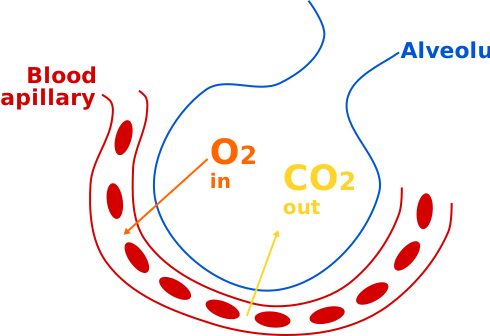
Diffusion principles (Fick's law). Gas transfer rises with membrane area, the partial-pressure difference and the gas's solubility, and falls with membrane thickness. CO₂ is about 20 times more soluble than O₂, so it crosses easily despite a gradient of only about 6 mmHg. At rest, blood takes about 0.75 s to pass an alveolus but equilibrates with O₂ in about 0.25 s; that reserve is what disappears during heavy exercise in a thickened (fibrotic) lung.
Ventilation–perfusion matching. Exchange works best when the air reaching an alveolus matches its blood flow. V̇/Q̇ is about 0.8 for the whole lung, higher at the apex and lower at the base. A unit with V̇/Q̇ near 0 is a shunt (perfused, not ventilated, as in pneumonia); its hypoxemia barely improves with extra O₂. A unit with V̇/Q̇ near infinity is dead space (ventilated, not perfused). Low alveolar PO₂ makes pulmonary arterioles constrict (hypoxic pulmonary vasoconstriction), steering blood toward better-ventilated alveoli; systemic arterioles do the opposite.
Oxygen and carbon dioxide transport
Oxygen and the dissociation curve
About 98.5% of O₂ rides on hemoglobin: four globin chains, each with a heme whose Fe²⁺ binds one O₂. Binding is cooperative, giving the S-shaped oxygen–hemoglobin dissociation curve. Arterial blood is about 97–98% saturated; venous blood at rest (PO₂ 40 mmHg) is still about 75% saturated, a reserve that exercise draws on. The P₅₀, the PO₂ at 50% saturation, is about 26–27 mmHg.

Read the curve in two zones. The flat upper part (PO₂ above about 60 mmHg) means saturation barely changes when alveolar PO₂ falls, which protects O₂ loading at moderate altitude. The steep middle part (20–40 mmHg) means a small drop in tissue PO₂ releases a lot of O₂.
| Factor | Shift | Effect |
|---|---|---|
| ↑ PCO₂, ↑ H⁺ (↓ pH) — the Bohr effect | Right (P₅₀ rises) | More O₂ unloaded in active tissue |
| ↑ temperature | Right | Warm working muscle gets more O₂ |
| ↑ 2,3-BPG | Right | Builds up at altitude and in chronic hypoxia |
| ↓ PCO₂, ↑ pH, ↓ temperature | Left | Fuller loading in the lungs |
| Fetal hemoglobin (HbF) | Left | Pulls O₂ from maternal blood |
| Carbon monoxide | Left, and lowers capacity | Occupies binding sites and holds the rest tightly |
| Myoglobin | Far left, hyperbolic | Muscle O₂ store released only at very low PO₂ |
Carbon dioxide
About 70% of CO₂ travels as bicarbonate. Carbonic anhydrase in red cells speeds ; HCO₃⁻ leaves for the plasma in exchange for Cl⁻ (the chloride shift). About 20–23% binds globin as carbaminohemoglobin, and 7–10% is dissolved. The Haldane effect is the partner of the Bohr effect: deoxygenated hemoglobin carries more CO₂ and H⁺, so venous blood loads CO₂ in the tissues and releases it in the lungs as hemoglobin picks up O₂.
Effects of exercise and high altitude
Both divisions list this at Regional level, and it is where curve shifts, ventilation formulas and control of breathing come together.
Exercise
- Ventilation rises almost instantly at the start of exercise (a neural, feed-forward signal from the motor cortex and limb mechanoreceptors), then climbs further as CO₂ production rises. Tidal volume increases first (toward about half of vital capacity), then rate. Minute ventilation can go from about 6 L/min at rest to over 100 L/min in trained adults.
- In moderate exercise arterial PO₂ and PCO₂ stay near normal: ventilation tracks metabolism (hyperpnea, not hyperventilation). Above the ventilatory threshold, lactic acid adds H⁺, which drives ventilation up faster than CO₂ output and lowers PaCO₂.
- O₂ delivery improves through the right shift (warmer, more acidic, higher-CO₂ muscle), more open pulmonary capillaries (more surface area, better V̇/Q̇ at the apex), and a wider arterial–venous O₂ difference: venous saturation can fall from 75% to about 25%.
- Training strengthens the respiratory muscles and raises VO₂max mostly through the heart and muscles; resting lung volumes change little.
High altitude
Altitude lowers barometric pressure, not the fraction of O₂ (still 21%). At about 3,000 m, P_B is roughly 525 mmHg, so inspired PO₂ falls from about 150 to about 100 mmHg.
| Time scale | Response | Mechanism |
|---|---|---|
| Minutes to hours | Ventilation rises | Peripheral (carotid body) chemoreceptors sense PaO₂ below about 60 mmHg |
| Hours | Respiratory alkalosis | Hyperventilation lowers PaCO₂; alkalosis briefly restrains the drive |
| 1–3 days | Kidneys excrete bicarbonate | pH returns toward normal and ventilation rises further (ventilatory acclimatization) |
| Hours to days | 2,3-BPG rises | Right shift aids unloading |
| Days to weeks | EPO from the kidney → more red cells | Higher hemoglobin and O₂ content (polycythemia) |
| Throughout | Hypoxic pulmonary vasoconstriction everywhere | Pulmonary hypertension; with uneven constriction, high-altitude pulmonary edema |
Ascending too fast causes acute mountain sickness (headache, nausea, poor sleep, often with periodic breathing at night), and in severe cases high-altitude pulmonary edema or cerebral edema. Slow ascent prevents it; acetazolamide, a carbonic anhydrase inhibitor that causes a mild metabolic acidosis and so stimulates breathing, speeds acclimatization; descent and oxygen treat it.
Regulation and control of breathing
The rhythm comes from the brainstem. In the medulla, the ventral respiratory group contains the pre-Bötzinger complex, the pacemaker for basic rhythm; its neurons drive the phrenic and intercostal nerves and add forced expiration. The dorsal respiratory group integrates input from peripheral chemoreceptors and stretch receptors (some textbooks credit it with setting the rhythm). In the pons, the pneumotaxic center (pontine respiratory group) cuts inspiration short and smooths the rhythm, while the apneustic center prolongs inspiration; damage to the pons is what produces apneustic breathing.
| Sensor | Location | Senses | Effect |
|---|---|---|---|
| Central chemoreceptors | Ventral surface of the medulla, bathed in CSF | H⁺ in CSF, made when CO₂ crosses the blood–brain barrier | Main moment-to-moment driver; ↑ PCO₂ → ↑ ventilation |
| Peripheral chemoreceptors | Carotid bodies (glossopharyngeal nerve IX) and aortic bodies (vagus X) | PaO₂ below about 60 mmHg, plus PaCO₂ and H⁺ | Hypoxic drive; the only O₂ sensors |
| Pulmonary stretch receptors | Airway smooth muscle | Lung inflation | Hering–Breuer reflex limits overinflation |
| Irritant receptors | Airway epithelium | Dust, smoke | Cough, bronchoconstriction |
| Higher centers | Cortex, limbic system | Speech, emotion, voluntary control | Temporary override (breath-holding) |
Blood chemistry. CO₂, H⁺ and HCO₃⁻ are tied together by the bicarbonate buffer, so the lungs control pH minute by minute while the kidneys adjust HCO₃⁻ over days.
| Disturbance | pH | PaCO₂ | Respiratory cause |
|---|---|---|---|
| Respiratory acidosis | Low | High | Hypoventilation: COPD exacerbation, opioid overdose, severe sleep apnea |
| Respiratory alkalosis | High | Low | Hyperventilation: altitude, anxiety, early pulmonary edema or pneumonia |
Disorders
Rows follow the order of the 2027 lists. Treatment and prevention are State & National content in Division B; in Division C, prevention, diagnosis and treatment are all National-only.
| Disorder | Level | Cause / mechanism | Signs and symptoms | Diagnosis (what a test shows) | Treatment | Prevention |
|---|---|---|---|---|---|---|
| Asthma | Regional | Chronic airway inflammation (often allergic, type I hypersensitivity) with reversible bronchoconstriction, mucus and swelling | Wheeze, cough, chest tightness, worse at night or with triggers | Obstructive spirometry that improves after a bronchodilator; eosinophils and Charcot–Leyden crystals in sputum | Short-acting β₂ agonists for relief; inhaled corticosteroids for control | Avoid triggers; daily controller therapy |
| COPD | Regional | Long-term smoke or pollutant exposure causing chronic bronchitis (mucus hypersecretion, airway inflammation) and/or emphysema; largely irreversible | Chronic productive cough (chronic bronchitis: at least 3 months a year for 2 years), exertional breathlessness | FEV₁/FVC < 0.70 after bronchodilator | Smoking cessation, long-acting bronchodilators, pulmonary rehabilitation, oxygen | Do not smoke; reduce air pollution exposure |
| Emphysema | Regional | Destruction of alveolar walls: elastase from neutrophils outruns α1-antitrypsin. Smoking causes centriacinar damage in the upper lobes; inherited α1-antitrypsin deficiency causes panacinar, lower-lobe disease at a young age | Breathlessness, barrel chest, pursed-lip breathing | Obstructive pattern, high TLC and RV, low DLCO | As for COPD; α1-antitrypsin replacement for the deficiency; lung volume reduction or transplant | Do not smoke |
| Pneumonia | Regional | Infection fills alveoli with fluid and cells; Streptococcus pneumoniae is the classic bacterial cause; also viruses and atypical organisms | Fever, productive cough, pleuritic chest pain, crackles | Consolidation on chest X-ray; shunt physiology | Antibiotics for bacteria; supportive care | Pneumococcal and flu vaccines; hand hygiene |
| Sleep apnea | Regional | Obstructive: throat muscles relax and the airway collapses in sleep. Central: the brainstem stops sending the signal | Loud snoring, witnessed pauses, daytime sleepiness | Polysomnography; apnea-hypopnea index ≥ 5 events per hour | CPAP; oral appliances; weight loss | Weight control; avoid alcohol and sedatives at night |
| Cystic fibrosis | Regional | Autosomal recessive mutation of CFTR, a chloride channel (most often F508del); thick, dehydrated mucus | Recurrent infections (often Pseudomonas), salty sweat, poor growth, pancreatic insufficiency | Sweat chloride ≥ 60 mmol/L; newborn screening; genetic testing | CFTR modulators, airway clearance, antibiotics, pancreatic enzymes | Carrier screening and genetic counseling |
| Tuberculosis | State & National | Mycobacterium tuberculosis, spread by airborne droplets; granulomas (often in the upper lobes), latent or active disease | Chronic cough, hemoptysis, fever, night sweats, weight loss | Acid-fast bacilli in sputum, culture; skin test or interferon-γ release assay for infection | Multi-drug regimen for months (classic: isoniazid, rifampin, pyrazinamide, ethambutol) | Treat latent infection; BCG vaccine in high-burden countries |
| Pulmonary edema | State & National | Fluid in the interstitium and alveoli, most often from left heart failure (high capillary pressure); also leaky capillaries or altitude | Breathlessness, orthopnea, pink frothy sputum, crackles | Chest X-ray; low PaO₂ | Diuretics, oxygen, treat the cause | Manage heart disease and blood pressure |
| Pleurisy | State & National | Inflamed pleural layers rub against each other, often after viral infection or pneumonia | Sharp chest pain on breathing in or coughing | Pleural friction rub; imaging for effusion | Anti-inflammatory drugs; treat the cause | Treat underlying infections |
| Pulmonary fibrosis | State & National | Scarring thickens the interstitium (idiopathic, drugs, radiation, dust) | Dry cough, progressive breathlessness, clubbing | Restrictive pattern, low TLC, low DLCO | Antifibrotics (pirfenidone, nintedanib), oxygen, transplant | Avoid smoking and occupational dusts |
| Pneumoconiosis | State & National | Inhaled mineral dust scars the lung: silicosis (silica; upper lobes, raises TB risk), coal worker's lung (coal dust; upper lobes, "black lung"), asbestosis (asbestos fibers; lower lobes, pleural plaques, raises mesothelioma and lung cancer risk) | Slowly worsening breathlessness and cough | Restrictive pattern plus occupational history | No cure: remove exposure, supportive care | Dust control, ventilation, respirators |
| Small cell lung cancer | B: State & National; C: National | Neuroendocrine tumor, almost always in smokers; central, fast-growing, spreads early | Cough, hemoptysis; paraneoplastic syndromes (SIADH, Cushing-like ACTH excess, Lambert–Eaton) | Imaging and biopsy; staged as limited or extensive | Chemotherapy with radiation, plus immunotherapy | Do not smoke; low-dose CT screening for heavy smokers |
| Non-small cell lung cancer | B: State & National; C: National | About 85% of lung cancers: adenocarcinoma (most common, peripheral, also in nonsmokers), squamous cell (central, smokers), large cell | Persistent cough, hemoptysis, weight loss | Imaging and biopsy; tumor mutation testing (EGFR, ALK) | Surgery when localized; radiation; targeted drugs and immunotherapy | Do not smoke; test homes for radon; screening |
| Acute respiratory distress syndrome (ARDS) | C: National | Diffuse alveolar damage after sepsis, pneumonia, aspiration or trauma; leaky capillaries flood alveoli and inactivate surfactant | Severe breathlessness within a week of the injury | Bilateral infiltrates not explained by heart failure; low PaO₂/FiO₂ ratio (≤ 300 mmHg) | Mechanical ventilation with low tidal volumes, PEEP, prone positioning, treat the cause | Early treatment of sepsis and injury |
| Infant respiratory distress syndrome | C: National | Premature lungs make too little surfactant (risk rises with prematurity and maternal diabetes); alveoli collapse | Grunting, nasal flaring, retractions, cyanosis soon after birth | "Ground-glass" lungs with air bronchograms on X-ray | Surfactant replacement, CPAP, ventilation | Antenatal corticosteroids before preterm birth |
| Pulmonary hypoplasia | C: National | Lungs underdeveloped before birth: too little room (congenital diaphragmatic hernia) or too little amniotic fluid (oligohydramnios, e.g. kidney agenesis or early membrane rupture) | Respiratory failure and pulmonary hypertension at birth | Prenatal ultrasound or MRI (lung-to-head ratio); small lungs on imaging | Ventilation, ECMO, hernia repair; fetal tracheal occlusion in selected cases | Prenatal diagnosis and planned delivery at a specialist center |
Common pitfalls
How tournaments test this
The Scio.ly test archive holds 1,697 respiratory questions from public tests in the 2017-18 season (900) and the 2022-23 season (797); 868 pass the trust filter for practice quizzes, and the question bank adds 3,094 more prompts. A question can carry more than one subtopic tag.
- Division and format. Division C makes up 69% of the archive (1,172 questions), Division B 29% (484). Archived questions are 48% multiple choice, 45% free response, 4% true/false and 3% select-all.
- Subtopics. Breathing (volumes, mechanics, control) has 606 archived questions, Pathology 485, Gas Exchange 460, Lungs 342 and Airways 300.
- Task shapes. "Which of the following" appears in about 10% of questions, explain-or-why in 6%, case scenarios in 4%, figure identification in 3.5%, graph or table interpretation in 2.6% and calculations in 2.1%.
- Recurring terms. "Carbon dioxide" (155 questions), "gas exchange" (141), "tidal volume" (112), "vital capacity" (79), "partial pressure" (73), "cystic fibrosis" (66) and "dissociation curve" (58).
- Answers that keep coming back. Alveoli (40), emphysema (36), diaphragm (23), asthma (22), larynx (22), vital capacity (20), pneumonia (17), trachea (17), medulla oblongata (14), cystic fibrosis, surfactant, tidal volume and residual volume (13 each), sleep apnea (12) and visceral pleura (12).
- What to expect in 2027. A labeled figure of the airway or a micrograph to identify; a spirogram or flow–volume loop to read and classify; a case vignette (smoker with a chronic cough, child with salty sweat, miner with restrictive lungs) to diagnose; a two-step calculation (alveolar ventilation, dead space, alveolar O₂ at altitude, O₂ content); and a curve-shift question. Exercise, altitude and breathing patterns are Regional topics in both divisions, so expect them at every level.
Test yourself
These are real questions from public tournament tests. Click an answer to check it; each links to the full test. Questions whose official key looked wrong or ambiguous, or whose topic falls outside the 2027 rules, were left out.
- 1
Which of the following is NOT a mechanism used by the lungs to protect the body from particulate matter?
Practice more Anatomy and Physiology questions →
- 1
How many major phases are there in pulmonary ventilation?
Practice more Anatomy and Physiology questions →
- 1
A 35 year old patient is a heavy smoker and has chronic cough, fatigue and breathlessness on exertion. What disease is he most likely suffering from?
Practice more Anatomy and Physiology questions →
References and further reading
- OpenStax, Anatomy and Physiology 2e, chapter 22 (The Respiratory System): https://openstax.org/books/anatomy-and-physiology-2e/pages/22-introduction
- National Heart, Lung, and Blood Institute, lung health topics (asthma, COPD, cystic fibrosis, sleep apnea, ARDS, respiratory distress syndrome): https://www.nhlbi.nih.gov/health-topics
- Global Initiative for Chronic Obstructive Lung Disease (GOLD), spirometric criteria for COPD: https://goldcopd.org
- CDC, tuberculosis and pneumonia: https://www.cdc.gov/tb/ and https://www.cdc.gov/pneumonia/
- NIOSH, coal workers' pneumoconiosis, silicosis and asbestosis: https://www.cdc.gov/niosh/
- National Cancer Institute, small cell and non-small cell lung cancer treatment summaries: https://www.cancer.gov/types/lung
- MedlinePlus, pulmonary hypoplasia, altitude illness and spirometry: https://medlineplus.gov
- SciOly Wiki, Anatomy and Physiology (another summary of the event): https://scioly.org/wiki/index.php/Anatomy_and_Physiology
- Practice more: the archived Anatomy & Physiology tests in the Scio.ly test archive.