Botany
2027 season
On this page(19 sections)
Botany is the Science Olympiad event about plant life in general: how plants are built, how they grow and move water and sugar, how the major groups differ, where they came from, and what they mean for ecosystems and for people. The 2027 rules make it a broad, general-botany event. Next to the core of anatomy and physiology, the topic list now names the history of botany, plant genetics, paleobotany, global energy and nutrient cycles, crops and plant products, genetically modified organisms, and plant diseases, including nutrient deficiencies. Division C adds four more areas: horticulture and aquaculture, plant biochemistry, plants in medicine and environmental management, and the importance of plant diversity.
There are no subtopic guides for botany, so this page covers the whole event. Each section takes one area of the 2027 outline, explains the mechanism behind it, works the formulas, and shows how archived tournament questions test it.
Event format
| Rule | Division B | Division C |
|---|---|---|
| Team | Up to 2 students | Up to 2 students |
| Time | About 50 minutes | About 50 minutes |
| Calculators | Up to two Class II calculators | Up to two Class II calculators |
| Notes | One 8.5" × 11" sheet, both sides, any content from any source | Same as Division B |
| Writing | Writing utensils | Writing utensils |
| Provided by supervisors | Live or preserved specimens, pictures, data tables and graphs, microscopes, slides and other equipment | Same as Division B |
| Format | A written (paper) test or a station test, at the supervisor's choice | Same as Division B |
| Scoring | High score wins; preselected questions break ties | Same as Division B |
The two divisions share identical logistics in 2027. Only the topic list differs (see the next section).
Calculators. Class II means a stand-alone scientific calculator that is neither programmable nor graphing (a TI-30X or Casio fx-260 type). A lower class is always allowed. Graphing calculators, programmable non-graphing calculators and phone or watch apps are not. The class definitions are in the General Rules on soinc.org.
The notes sheet. You get exactly one sheet of letter paper, and you may use both sides. Lamination or a sheet protector is fine for durability, but a second sheet (even inside the same protector) is not, and neither are labels or tabs stuck onto the page. With a topic list this wide, the sheet should hold the things you cannot reason out: dates, names, deficiency symptoms, the hormone table and formulas.
Specimens and equipment. The supervisor brings everything that is examined, so expect real or preserved plant material, slides and microscopes at stations. If a supervisor uses toxic or irritating plants, or specimens kept in liquid (algae and protists, for example), they must be in closed, unbreakable containers. Practice focusing a compound microscope and identifying tissues on prepared slides before the tournament.
Eye protection. The event page sets no event-specific eye-protection requirement; the General Rules and policies on soinc.org still apply.
What the rules cover
The 2027 rules describe Botany in three layers: the structure and function of the plant body, the broad divisions between groups of plants, and a numbered list of additional topics. Division B has 11 numbered topics; Division C has the same 11 plus four more. The rules set no level restrictions (Regional, State and National cover the same list) and give no specimen list or topic weights.
| Rules area | Division B | Division C | Where it is covered |
|---|---|---|---|
| Structure of cells, roots, stems, leaves, spore-forming bodies and flowers | Yes | Yes | The plant body |
| Plant growth and differentiation | Yes | Yes | Growth and differentiation |
| Transport and storage of gases, water and nutrients | Yes | Yes | Transport and storage |
| Major divisions: algae vs. multicellular plants, monocot vs. dicot, embryophytes vs. cryptogams, woody vs. herbaceous | Yes | Yes | Major groups of plants |
| i. History of botany | Yes | Yes | History of botany |
| ii. Basic plant genetics and reproduction | Yes | Yes | Genetics and reproduction |
| iii. Photosynthesis | Yes | Yes | Photosynthesis and respiration |
| iv. Differences between the major taxonomic groups | Yes | Yes | Major groups of plants |
| v. Paleobotany and plant evolution | Yes | Yes | Paleobotany and plant evolution |
| vi. Plants in global energy and nutrient cycles | Yes | Yes | Plants in ecosystems |
| vii. Use of plant materials by animals and humans | Yes | Yes | Plants, food and people |
| viii. Competition in the plant community | Yes | Yes | Plants in ecosystems |
| ix. Genetically modified organisms | Yes | Yes | Plants, food and people |
| x. Production of foodstuffs and plant products | Yes | Yes | Plants, food and people |
| xi. Plant diseases, including nutrient deficiencies and infections | Yes | Yes | Plant diseases and nutrient deficiencies |
| xii. Horticulture and aquaculture | No | Yes | Division C topics |
| xiii. Plant biochemistry | No | Yes | Division C topics |
| xiv. Plants in medicine and environmental management | No | Yes | Division C topics |
| xv. Importance of plant diversity | No | Yes | Division C topics |
The source references for this table are the 2027 Botany pages (B11 for Division B, C13 for Division C), section 3, items b through d.
The plant body
Cells
Plant cells share the basics of animal cells (nucleus, mitochondria, plasma membrane, endoplasmic reticulum, Golgi, ribosomes) and add three features that explain most of plant structure. A cell wall of cellulose surrounds the membrane and resists the pressure that water creates inside the cell. A large central vacuole stores water, ions, pigments and waste, and presses the cytoplasm against the wall. Plastids include chloroplasts (photosynthesis), amyloplasts (starch storage) and chromoplasts (carotenoid pigments in fruits and petals). Neighboring cells connect through plasmodesmata, channels through the walls that link their cytoplasm.
When a cell takes in water, its vacuole swells against the rigid wall and creates turgor pressure. Turgor keeps herbaceous stems and leaves upright and drives the opening of stomata. A wilted plant has lost turgor.
Many cells add a secondary wall inside the primary one once they stop growing. Secondary walls are stiffened with lignin, which is what makes wood and the water-conducting cells of xylem rigid and waterproof.
Tissues
| Tissue system | Main cell types | Function |
|---|---|---|
| Dermal | Epidermis, guard cells, root hairs, trichomes; periderm (cork) in woody parts | Covers the plant, controls gas exchange and water loss, absorbs water and minerals |
| Ground | Parenchyma (storage and photosynthesis), collenchyma (flexible support), sclerenchyma (rigid support: fibers and sclereids) | Most of the plant body; stores food, photosynthesizes, supports |
| Vascular | Xylem (tracheids, vessel elements), phloem (sieve-tube elements, companion cells) | Moves water and minerals (xylem) and sugars (phloem) |
Xylem conducting cells are dead at maturity: hollow, lignified tubes. Phloem sieve-tube elements are alive but have lost their nucleus, and they rely on the companion cells beside them.
Roots, stems and leaves
| Organ | Main job | Structure to know |
|---|---|---|
| Root | Anchors, absorbs water and minerals, stores food in many species | Root cap protects the tip; root hairs multiply surface area; taproot (most dicots) vs. fibrous system (monocots) |
| Stem | Supports leaves and flowers, conducts water and sugar | Nodes (where leaves attach) and internodes; axillary buds; vascular bundles in a ring (dicots) or scattered (monocots) |
| Leaf | Photosynthesis and gas exchange | Blade, petiole, stipules; cuticle, epidermis, palisade and spongy mesophyll, stomata, veins |
Root layers. In cross-section a young root has, from outside in, the epidermis (with root hairs), the cortex (storage), the endodermis with its waterproof Casparian strip, the pericycle (dividing cells that produce lateral roots), and the central vascular cylinder. Pericycle is the official key answer to 8 archived questions.
Many organs are modified for other jobs, and tests like to ask which organ a structure really is. Tendrils of peas are leaves, cactus spines are leaves, and the "eyes" of a potato are buds on a stem. Underground storage organs are a favorite:
| Structure | What it is | Example |
|---|---|---|
| Stolon | Horizontal above-ground stem that roots at nodes | Strawberry runners |
| Rhizome | Horizontal underground stem with nodes and buds | Ginger, iris |
| Tuber | Swollen tip of an underground stem, with buds ("eyes") | Potato |
| Bulb | Short stem wrapped in fleshy, food-storing leaves | Onion, tulip |
| Corm | Swollen underground stem base, almost all stem tissue, with papery leaf bases | Crocus, gladiolus |
| Storage root | A true root swollen with food | Carrot, sweet potato |

Spore-forming bodies
The 2027 outline names spore-forming bodies alongside flowers, so expect station questions that show a moss capsule, a fern frond or a cone. Every land plant makes spores by meiosis inside a sporangium; the groups differ in where the sporangia sit and how spores are released.
| Group | Spore-forming structure | What to recognize |
|---|---|---|
| Mosses | Capsule at the tip of a stalk (seta) | Lid (operculum) and a ring of teeth (peristome) that control spore release; a cap (calyptra) on young capsules |
| Liverworts | Small capsules; some form gemma cups for asexual spread | Elaters (spiral cells) help scatter spores |
| Ferns | Sori: clusters of sporangia on the underside of fronds, often under a flap (indusium) | Each sporangium has an annulus, a row of thick-walled cells that dries, bends back and snaps forward to fling spores |
| Horsetails and club mosses | Strobili (cones) of sporangia at stem tips | Horsetail spores carry elaters; some club mosses (Selaginella) make two spore sizes |
| Seed plants | Anthers (microsporangia) and ovules (each with a megasporangium) | Pollen grains are the male gametophytes; the embryo sac in the ovule is the female gametophyte |
Homospory (one spore type) is the rule in mosses, most ferns and horsetails. Heterospory (small microspores that become male gametophytes and large megaspores that become female gametophytes) evolved in Selaginella, some aquatic ferns and all seed plants. It is the step that made seeds possible.

Flowers
Angiosperm flowers are built from four whorls: sepals (protect the bud), petals (attract pollinators), stamens (each an anther on a filament; anthers make pollen), and carpels (each a stigma that receives pollen, a style, and an ovary holding ovules). A flower with all four is complete; one with both stamens and carpels is perfect (bisexual).

Monoecious plants carry separate male and female flowers on the same individual (corn, squash). Dioecious plants carry them on different individuals (willow, holly, asparagus, ginkgo's cones). Roses have bisexual flowers, which is neither.
Growth and differentiation
Meristems and the root tip
Plants grow from meristems, tissues of undifferentiated, dividing cells. Apical meristems at root and shoot tips make the plant longer (primary growth). Lateral meristems make it thicker (secondary growth): the vascular cambium adds secondary xylem inward and secondary phloem outward, and the cork cambium makes the protective periderm (bark). Grasses also have intercalary meristems at the base of leaves and internodes, which is why a lawn regrows after mowing.
A root tip shows growth and differentiation in sequence. Behind the root cap lies the zone of cell division (the meristem), then the zone of elongation (cells lengthen and push the tip through soil), then the zone of maturation (cells differentiate into xylem, phloem and epidermis, and root hairs appear). Differentiation is the process by which genetically identical cells take on different structures and jobs. Many mature plant cells keep the ability to dedifferentiate and regenerate a whole plant (totipotency), which is what makes cuttings and tissue culture work.
Plant hormones
Hormones coordinate growth and differentiation. They act at low concentrations and often in balance with one another.
| Hormone | Main effects | Typical test link |
|---|---|---|
| Auxin (IAA) | Cell elongation; phototropism and gravitropism; apical dominance; root initiation on cuttings | Bending toward light; rooting powders |
| Gibberellin | Stem elongation; breaks seed dormancy; mobilizes stored food in germinating cereal seeds | Dwarf mutants; seedless grape size |
| Cytokinin | Cell division; delays leaf senescence; with auxin, sets shoot vs. root formation | Cytokinin-to-auxin ratio in tissue culture |
| Abscisic acid (ABA) | Closes stomata under water stress; maintains seed dormancy | Drought responses |
| Ethylene | A gas; fruit ripening, leaf and fruit abscission, the triple response in seedlings | "One bad apple" ripening the bowl |
Auxin promotes elongation by acidifying the cell wall: proton pumps loosen the wall and turgor stretches the cell. The phototropism chain is the template for most hormone questions: light hits one side of the shoot → auxin moves to the shaded side → shaded-side cells elongate more → the shoot bends toward light. In gravitropism, starch-filled plastids (statoliths) settle to the lower side of cells; auxin collects there, which speeds elongation on the lower side of a shoot (it turns up) but slows it on the lower side of a root (it turns down).
Photoperiodism is the flowering response to day length, which plants measure as night length through the pigment phytochrome. Short-day plants (poinsettia, chrysanthemum) flower when nights exceed a critical length; long-day plants (spinach) flower when nights are shorter than it; day-neutral plants (tomato) ignore it.
Woody and herbaceous growth
Woody plants keep a vascular cambium and cork cambium active for years, so they lay down wood and bark and grow thicker each season. Each year's wood forms an annual ring: wide, thin-walled earlywood in spring and narrow, dense latewood in summer, so counting rings dates a stem. Heartwood (older, inner, nonconducting and often darker) surrounds the pith; sapwood (younger, outer) still conducts water. Everything outside the vascular cambium, including the secondary phloem, is bark.
Herbaceous plants have little or no secondary growth; their stems are soft and green and often die back each year. Lifespan categories cut across this: annuals complete their life cycle in one growing season, biennials in two (a rosette the first year, flowers the second, as in carrot), and perennials live for many years, including herbaceous perennials that regrow from underground organs. Monocot "trees" such as palms thicken without a true vascular cambium, so they lack annual rings.
Transport and storage
Water and minerals
Water moves from higher to lower water potential (Ψ), and the steepest drop is from the leaf to the air. The pathway runs root hair → cortex → endodermis → xylem → leaf → stomata. In the cortex, water travels both through cell walls (the apoplast) and through cytoplasm via plasmodesmata (the symplast). At the endodermis the Casparian strip blocks the wall route, so everything entering the xylem must cross a membrane, letting the root choose what enters.
Cohesion-tension. Water evaporating from the leaf (transpiration) pulls the xylem column upward under tension. Water molecules cohere through hydrogen bonds and adhere to the lignified xylem walls, so the column moves as one. An air bubble (cavitation) breaks the column. At night, roots can also push water up a short way by root pressure, which forces droplets out of leaf margins (guttation).
Minerals reach the root by diffusion and mass flow, and mycorrhizal fungi extend the absorbing surface far beyond the root, improving phosphorus and water uptake in exchange for sugar.
Gases
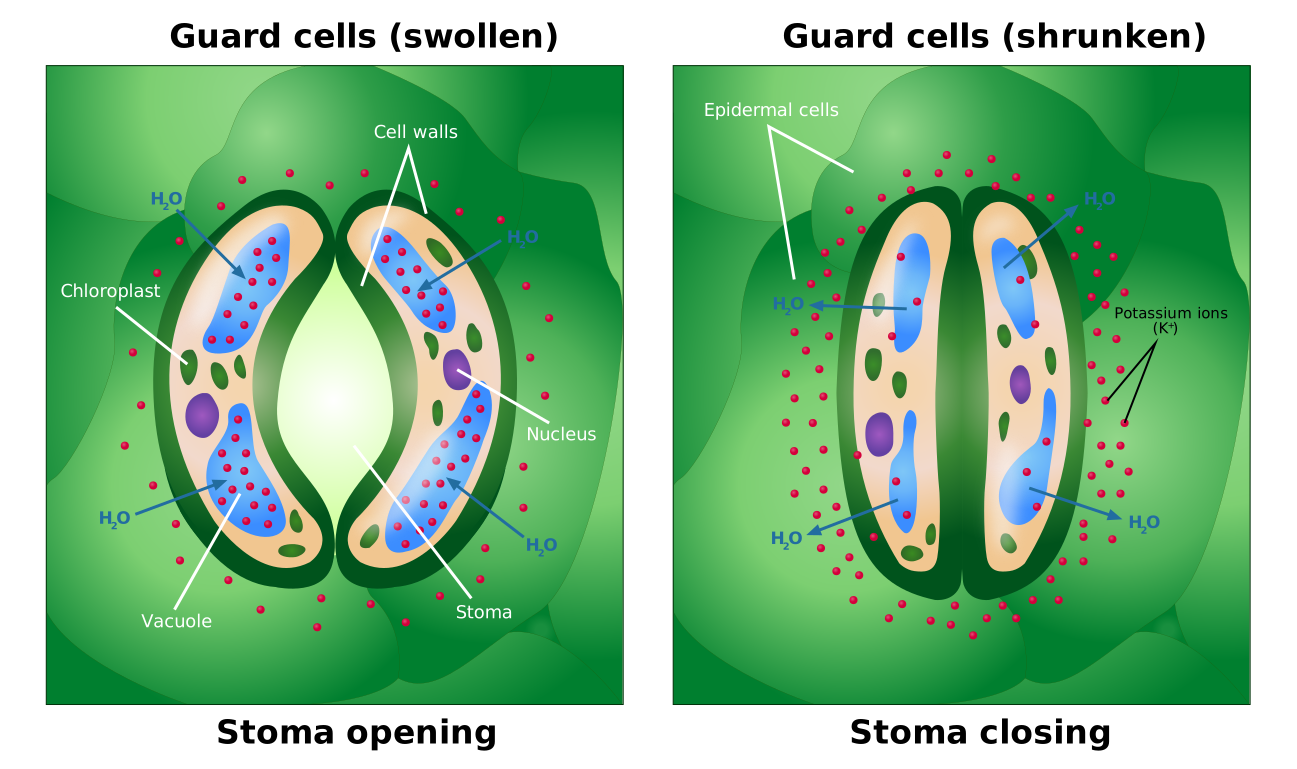
Leaves exchange CO₂ and O₂ through stomata. Each stoma is a pore between two guard cells. When guard cells take in potassium ions, their water potential falls, water enters, turgor rises, and the cells bow apart to open the pore; losing K⁺ reverses this. Light (especially blue light) opens stomata in most plants; ABA, high internal CO₂ and water stress close them.
Stems with bark breathe through lenticels, loose patches in the periderm. Roots and every living cell need O₂ for respiration, which is why waterlogged soil kills many plants. Wetland plants cope with aerenchyma, tissue with large air channels that carry O₂ down to submerged roots.
Sugars and storage
Sugar (mostly sucrose) moves in the phloem from a source (a mature leaf, or a storage organ being emptied) to a sink (roots, fruits, growing tips, storage organs being filled). The pressure-flow model explains it: loading sugar at the source draws water in by osmosis and raises pressure; unloading at the sink lowers it, so sap flows from high to low pressure. Phloem can run in either direction depending on where sources and sinks are; xylem runs only upward.
Plants store energy mainly as starch (in amyloplasts of roots, tubers and seeds), as sugars in vacuoles (sugarcane, beets), and as oils in seeds (sunflower, canola). The same storage organ can be a sink in one season and a source in the next: a potato tuber fills in summer and feeds the new shoots the following spring.
Major groups of plants
The 2027 rules name four contrasts. Each is a different way of slicing the plant world, and each has a few textbook features to know.
Algae vs. multicellular land plants
"Algae" is an informal word for photosynthetic organisms that are not land plants. It covers single cells (Chlamydomonas, diatoms) and large multicellular seaweeds (kelp). Only the green algae are close relatives of plants; red algae are more distant, and brown algae (kelp) belong to a different lineage altogether. Land plants evolved from freshwater green algae called charophytes, with which they share chlorophylls a and b, starch storage and cellulose walls.
| Feature | Algae | Land plants (embryophytes) |
|---|---|---|
| Body | Single cells, colonies or a thallus without true roots, stems or leaves | Organs (roots, stems, leaves) in vascular plants; at least a protected plant body in mosses |
| Embryo | Not retained; zygote is released or develops freely | Embryo develops inside the parent's tissue |
| Gamete-making organs | Usually single cells | Multicellular, with a protective jacket (antheridia, archegonia) |
| Water loss protection | Little or none | Waxy cuticle; stomata in most groups |
| Habitat | Mostly aquatic | Mostly terrestrial |
Embryophytes vs. cryptogams
These are two older terms that overlap, which makes them easy to confuse. Embryophytes are the land plants: every group whose embryo develops inside the parent (mosses, liverworts, hornworts, ferns and their allies, gymnosperms and angiosperms). Cryptogams ("hidden reproduction") is a traditional name for organisms that reproduce by spores and have no flowers or seeds: algae, bryophytes and ferns (older texts also included fungi and lichens). The opposite term is phanerogams, the seed plants. So a fern is both an embryophyte and a cryptogam, a green alga is a cryptogam but not an embryophyte, and a pine is an embryophyte but not a cryptogam.
The major taxonomic groups
| Group | Examples | Vascular tissue | Dominant generation | Seeds | Key test features |
|---|---|---|---|---|---|
| Bryophytes | Mosses, liverworts, hornworts | None | Gametophyte | None (spores) | Swimming sperm need water; the sporophyte stays attached to and fed by the gametophyte |
| Seedless vascular plants | Ferns, horsetails, club mosses | Yes | Sporophyte | None (spores) | Free-living gametophyte (prothallus); swimming sperm |
| Gymnosperms | Conifers, cycads, ginkgo, gnetophytes | Yes | Sporophyte | Naked (not enclosed in an ovary) | Cones; mostly wind pollination |
| Angiosperms | Grasses, roses, legumes, sunflowers | Yes | Sporophyte (gametophytes microscopic) | Enclosed in a fruit | Flowers; double fertilization; fruit |
Every land plant alternates between a haploid gametophyte (makes gametes by mitosis) and a diploid sporophyte (makes spores by meiosis). The trend across the table is a shrinking gametophyte: large and free-living in mosses, small but independent in ferns, microscopic and dependent on the sporophyte in seed plants.

Naming. Species carry two-part Latin names (binomial nomenclature): the genus capitalized, the species epithet lowercase, both italicized, as in Zea mays (corn). Names group into families (Poaceae, Fabaceae, Rosaceae, Asteraceae, Solanaceae are the ones tests reach for most), orders, classes and divisions (botanists often say division where zoologists say phylum).
Monocots vs. dicots
| Feature | Monocots | Dicots (mostly eudicots) |
|---|---|---|
| Cotyledons | One | Two |
| Leaf veins | Parallel | Netted (reticulate) |
| Stem vascular bundles | Scattered | In a ring |
| Flower parts | Usually in threes | Usually in fours or fives |
| Roots | Fibrous | Taproot common |
| Pollen | One pore or furrow | Three pores or furrows (eudicots) |
| Secondary growth | Rare | Common (woody dicots) |
| Examples | Grasses, lilies, orchids, palms | Roses, beans, oaks, sunflowers |
The traditional "dicots" are not one natural group: most are eudicots, and a few early-branching lineages (magnolias, water lilies, laurels) sit outside both. Tests usually use "dicot" in the traditional sense.

Photosynthesis and respiration
Light-dependent reactions run on the thylakoid membranes. Light excites electrons in photosystem II, which pass along an electron transport chain to photosystem I. Water is split to replace them, releasing O₂. The chain pumps protons into the thylakoid space, and ATP synthase uses that gradient to make ATP; electrons leaving photosystem I reduce NADP⁺ to NADPH. Photosystem II acts first; the numbers reflect the order of discovery.
The Calvin cycle runs in the stroma. RuBisCO attaches CO₂ to the five-carbon RuBP; ATP and NADPH reduce the products to G3P. Six turns fix six CO₂ and make 12 G3P: 10 regenerate RuBP and 2 build one glucose. The cycle consumes ATP and NADPH; it does not make them.
Chlorophyll absorbs blue and red light strongly and reflects green, which is why leaves look green. Carotenoids are accessory pigments that widen the absorbed range and protect against excess light.
Photorespiration happens when RuBisCO grabs O₂ instead of CO₂, wasting fixed carbon and energy. It is common in C₃ plants on hot, dry days, when stomata close and O₂ builds up inside the leaf.
| Pathway | How the steps are separated | Stomata open | Example plants |
|---|---|---|---|
| C₃ | No separation; Calvin cycle in mesophyll | Day | Wheat, rice, soybean |
| C₄ | In space: PEP carboxylase fixes CO₂ in mesophyll cells; the Calvin cycle runs in bundle-sheath cells | Day | Corn, sugarcane |
| CAM | In time: CO₂ fixed into acid at night and stored in vacuoles; Calvin cycle by day | Night | Cacti, agave, pineapple |

Cellular respiration runs in every living plant cell day and night: glycolysis in the cytosol, the Krebs cycle in the mitochondrial matrix, and oxidative phosphorylation across the inner mitochondrial membrane. A plant gains carbon only when photosynthesis outpaces respiration; the light level at which they balance is the light compensation point. When a light-response curve levels off, another factor (CO₂ or temperature) has become limiting.
Genetics and reproduction
Mendelian genetics in plants
Gregor Mendel worked out the rules of inheritance with garden peas, a plant that normally self-pollinates but can be hand-crossed. Each trait is controlled by a gene with two alleles at the same locus on homologous chromosomes; one allele may be dominant over a recessive one. A monohybrid cross of two heterozygotes (Tt × Tt) gives a 3 : 1 phenotype ratio and a 1 : 2 : 1 genotype ratio.
Plant genetics has some features animal genetics rarely shows. Incomplete dominance gives pink snapdragons from red × white. Polyploidy (more than two chromosome sets) is common and often creates new species in a single generation; bread wheat is hexaploid (2n = 6x = 42). Chloroplast genes are usually inherited only through the mother in flowering plants. Many species prevent selfing with self-incompatibility genes that block pollen tubes carrying a matching allele.
Sexual reproduction in flowering plants
Pollination moves pollen to a receptive stigma. A pollen grain grows a pollen tube down the style to an ovule and delivers two sperm. In double fertilization, unique to angiosperms, one sperm fuses with the egg (diploid zygote) and the other with two polar nuclei (triploid endosperm, the food store). The ovule becomes the seed and the ovary the fruit.
| Pollination syndrome | Typical flower traits |
|---|---|
| Wind | Small, dull or no petals; lots of light pollen; feathery stigmas; no nectar |
| Bee | Blue, yellow or white; sweet scent; landing platform; nectar guides (often UV) |
| Bird | Red or orange; tubular; abundant nectar; little scent |
| Bat | Pale; opens at night; musky scent; large and sturdy |
| Moth | White; opens at night; strong sweet scent; long narrow tube |
| Fly | Brown or purple; carrion-like scent |
Seeds disperse by wind (dandelion pappus, maple samaras), water (coconut), animals (burrs, fleshy fruits eaten and passed) and explosive pods (Impatiens).
Asexual reproduction
Stolons, rhizomes, tubers, bulbs and corms (see the storage table above) all produce clones. Clonal spread is fast and keeps a successful genotype, but a clonal patch carries little genetic variation, so one disease or one environmental change can hit every plant the same way.
Paleobotany and plant evolution
Paleobotany is the study of fossil plants. Plant fossils form in several ways: compressions (flattened organic films), impressions (an imprint with the tissue gone), petrifactions or permineralizations (minerals fill and preserve cells, as in petrified wood), casts and molds, and amber. Fossil pollen and spores are tough enough to survive almost anywhere; palynology uses them to reconstruct past vegetation and climate.
| Time (approximate) | Event |
|---|---|
| Middle Ordovician, about 470 million years ago | Earliest spores from land plants; plants descend from charophyte green algae |
| Silurian, about 430 million years ago | Early vascular plants such as Cooksonia: leafless, forked stems tipped with sporangia |
| Early Devonian, about 407 million years ago | The Rhynie chert preserves whole early plant communities in silica |
| Late Devonian, about 385-360 million years ago | First forests; Archaeopteris, a tree with wood but spores; the first seeds appear |
| Carboniferous, about 359-299 million years ago | Swamp forests of giant lycophytes, horsetails and ferns form most of the world's coal |
| Permian to Jurassic | Gymnosperms (conifers, cycads, ginkgos) dominate as climates dry |
| Early Cretaceous, about 130 million years ago | Flowering plants appear and then diversify rapidly alongside pollinating insects |
| Cenozoic | Grasslands spread; C₄ grasses expand in the last few million years |

Read the timeline as a series of innovations, each solving a problem of life on land: the cuticle and stomata (drying out), vascular tissue with lignin (standing tall and moving water), leaves and roots (capturing light and water), seeds (reproducing without swimming sperm and surviving dry spells), and flowers and fruits (recruiting animals to move pollen and seeds).
History of botany
Expect matching and short-answer questions that pair a person with a discovery. The people most often asked about:
| Person | When | Contribution |
|---|---|---|
| Theophrastus | about 371-287 BCE | Student of Aristotle; wrote Enquiry into Plants; called the father of botany |
| Dioscorides | 1st century CE | De Materia Medica, the standard guide to medicinal plants for some 1,500 years |
| Jan Baptista van Helmont | 1600s | Willow experiment: the tree gained mass while the soil barely changed, so he credited water |
| Robert Hooke | 1665 | Named "cells" after viewing cork in Micrographia |
| Stephen Hales | 1727 | Vegetable Staticks: measured transpiration and root pressure |
| Carl Linnaeus | 1753 | Species Plantarum, the starting point of binomial plant names |
| Joseph Priestley | 1770s | A plant "restored" air that a candle or mouse had used up |
| Jan Ingenhousz | 1779 | Showed that only the green parts of plants, and only in light, restore the air |
| Robert Brown | 1831 | Described the cell nucleus in orchid cells |
| Matthias Schleiden | 1838 | All plant tissues are made of cells (cell theory, with Schwann) |
| Gregor Mendel | 1866 | Laws of inheritance from pea crosses |
| Charles and Francis Darwin | 1880 | Coleoptile tips sense light and send a signal that causes bending |
| Frits Went | 1920s | Isolated that signal in agar blocks: auxin |
| Christen Raunkiær | early 1900s | Life-form system based on where renewal buds survive the unfavorable season |
| Melvin Calvin | 1950s (Nobel 1961) | Traced carbon fixation with radioactive carbon-14: the Calvin cycle |
| Norman Borlaug | 1960s (Nobel Peace 1970) | High-yield semi-dwarf wheat and the Green Revolution |
Plants in ecosystems
Energy and nutrient cycles
Plants are primary producers: almost all energy in terrestrial food webs enters through photosynthesis. Gross primary production (GPP) is the total carbon fixed; net primary production (NPP) is what remains after the plants' own respiration, and NPP is what herbivores can eat. Global NPP is roughly 100 billion tonnes of carbon per year, split about evenly between land plants and ocean phytoplankton. Only about 10% of the energy at one trophic level typically reaches the next, because most is lost as heat in respiration.
Carbon cycle. Photosynthesis pulls CO₂ from the air; respiration, decomposition and burning return it. Forests and soils store large carbon pools, and coal, oil and gas are ancient plant and plankton carbon.
Water cycle. Transpiration returns huge amounts of water to the atmosphere; over land, it makes up most of the water moving from the surface to the air, so clearing forests can reduce regional rainfall.
Nitrogen cycle. Plants cannot use atmospheric N₂.
| Stage | What happens | Who does it |
|---|---|---|
| Nitrogen fixation | N₂ → NH₃/NH₄⁺ | Rhizobia in legume root nodules; some free-living bacteria and cyanobacteria |
| Ammonification | Organic nitrogen → NH₄⁺ | Decomposers |
| Nitrification | NH₄⁺ → NO₂⁻ → NO₃⁻ | Nitrifying bacteria |
| Denitrification | NO₃⁻ → N₂ | Anaerobic bacteria |
Phosphorus cycle. Phosphorus has no significant gas phase; it comes from weathering rock, moves through soil and organisms, and is often the nutrient that limits growth. Mycorrhizae are the plant's main tool for getting it. Cation exchange capacity (CEC) measures how well soil clay and organic matter hold positive nutrient ions (Ca²⁺, Mg²⁺, K⁺, NH₄⁺) against leaching.
Competition in the plant community
Plants compete for light, water, nutrients and space, both with their own species (intraspecific) and with others (interspecific). Light competition is one-sided: a taller plant shades a shorter one, but not the reverse. Root competition for water and nutrients is more symmetric.
- Competitive exclusion and resource partitioning. Two species cannot share exactly the same limiting resources indefinitely. Coexisting plants partition them: shade-tolerant species in the understory, deep-rooted species tapping groundwater while shallow roots take rain, and species that grow in different seasons.
- Allelopathy. Some plants release chemicals that suppress neighbors. Black walnut's juglone is the standard example.
- Life-history strategies. Fast-growing, short-lived colonizers (many annual weeds) do well after disturbance; slow-growing, long-lived competitors take over as resources become scarce.
- Succession. Primary succession starts on bare rock or new lava with no soil; lichens and mosses build soil first. Secondary succession follows a disturbance that leaves soil and seed bank intact (fire, an abandoned field) and proceeds faster, typically annual weeds → perennials and grasses → shrubs → trees.
- Other interactions. Mutualisms (mycorrhizae, rhizobia, pollinators), herbivory (answered by thorns, spines and toxins such as alkaloids), and parasitism (dodder, mistletoe) shape which plants win.
Adaptations to environment
| Type | Environment | Typical features |
|---|---|---|
| Xerophytes | Dry | Thick cuticle, sunken stomata, spines or small leaves, deep roots, CAM in succulents |
| Hydrophytes | Aquatic | Aerenchyma, floating leaves with stomata on top, little support tissue |
| Halophytes | Salty soil | Salt glands, succulence, high internal solute levels |
| Epiphytes | On other plants (not parasitic) | Aerial roots, water-storing tissues (orchids, bromeliads) |
| Carnivorous plants | Nutrient-poor bogs | Traps that digest insects for nitrogen and phosphorus |
Plants, food and people
Use of plant materials by animals and humans
Animals cannot make enzymes that break down cellulose, the most abundant organic compound on land. Herbivores rely on microbes: ruminants (cows, sheep, deer) ferment plants in the rumen and rechew the cud; hindgut fermenters (horses, rabbits) ferment in the cecum and colon; termites carry gut symbionts. Humans get almost no energy from cellulose; to us it is dietary fiber.
People use plants for food, fiber (cotton, a seed hair, is the leading natural textile fiber; flax for linen; jute), wood and paper (secondary xylem and its cellulose), fuel, rubber (latex of Hevea brasiliensis), cork (the cork cambium's product in cork oak), dyes, beverages (coffee, tea, cacao) and medicines.
Production of foodstuffs and plant products
A handful of grasses feed the world: rice, wheat and maize supply a large share of human food energy (often quoted at around half). Other staples include potatoes, cassava and soybeans. Know where each product comes from in the plant:
| Product | Plant part |
|---|---|
| Wheat flour, rice, corn | Seed (grain; mostly endosperm) |
| Sugar | Stem (sugarcane) or storage root (sugar beet) |
| Potato | Stem tuber |
| Vegetable oils | Seeds (soybean, canola, sunflower) or fruit (olive, oil palm) |
| Coffee, cacao | Seeds |
| Tea | Leaves |
| Cinnamon | Bark |
Processing turns raw crops into foods: milling separates bran and germ from the endosperm (white flour); fermentation by yeast makes bread rise and turns sugars into alcohol; malting lets germinating barley convert its starch to sugar (gibberellin triggers the enzymes); bacteria ferment cabbage into sauerkraut.
The Green Revolution (1950s-1970s) raised yields with semi-dwarf wheat and rice, fertilizer, irrigation and pesticides. The dwarfing genes alter gibberellin production or response, giving short, sturdy stems that hold heavy heads of grain without falling over.
Genetically modified organisms
A GMO carries DNA changed with genetic engineering rather than by crossing alone. The classic method uses Agrobacterium tumefaciens, a soil bacterium that naturally inserts part of its Ti plasmid into plant cells; engineers replace the tumor genes with the gene they want. The gene gun (biolistics) instead fires DNA-coated metal particles into cells. Restriction enzymes cut DNA at specific sequences and DNA ligase joins fragments. Newer gene editing (CRISPR-Cas9) changes a plant's own genes, often without adding foreign DNA.
| Crop or trait | What was changed | Purpose |
|---|---|---|
| Bt corn and cotton | A Bacillus thuringiensis Cry protein gene (such as Cry1Ab) | Insect resistance |
| Herbicide-tolerant soybean, corn | A glyphosate-insensitive EPSPS enzyme | Weed control with glyphosate |
| Rainbow papaya (Hawaii, 1998) | A papaya ringspot virus coat-protein gene | Virus resistance |
| Golden Rice | Genes for β-carotene synthesis in the grain | Provitamin A in a staple food |
| Flavr Savr tomato (1994) | Reduced softening enzyme | First commercial GM food; longer shelf life |
The common concerns are pest and weed resistance (insects evolving tolerance to Bt, glyphosate-resistant weeds), gene flow to wild relatives, effects on non-target organisms, labeling and corporate control of seed. Tests often ask for one benefit and one risk, so prepare both.
Plant diseases and nutrient deficiencies
Infections
Disease needs three things together, the disease triangle: a susceptible host, a virulent pathogen and a favorable environment. Remove any one and the disease stops, which is the logic behind most control methods (resistant varieties, sanitation, crop rotation, adjusting watering).
| Pathogen type | Example disease | What to know |
|---|---|---|
| Fungus | Dutch elm disease | Spread by elm bark beetles; the fungus clogs xylem, so the crown wilts |
| Fungus | Chestnut blight | Wiped out the American chestnut as a canopy tree in the early 1900s |
| Fungus | Wheat stem rust | Rust-colored pustules; new strains (Ug99) threaten wheat |
| Oomycete (water mold) | Late blight of potato (Phytophthora infestans) | Caused the Irish famine of the 1840s; not a true fungus |
| Bacterium | Fire blight (apples, pears) | Shoots look scorched and curl into a "shepherd's crook" |
| Bacterium | Crown gall (Agrobacterium) | Tumor-like galls; the same bacterium is used to make GMOs |
| Virus | Tobacco mosaic virus | Mottled light and dark leaves; the first virus ever identified |
| Nematode | Root-knot nematode | Swollen galls on roots, stunted plants |
Common symptom words: chlorosis (yellowing), necrosis (dead tissue), wilt, galls, mosaic (patchy color), cankers (sunken dead areas on stems) and blight (rapid death of tissue). Insects matter twice, as pests and as vectors that carry pathogens. Biological control uses natural enemies of pests, such as insect-killing viruses (nuclear polyhedrosis viruses) and Bacillus thuringiensis sprays.
Nutrient deficiencies
Plants need macronutrients in large amounts (N, P, K, Ca, Mg, S) and micronutrients in trace amounts (Fe, Mn, Zn, Cu, B, Mo, Cl, Ni). The key to diagnosing a deficiency is mobility. A plant can move mobile nutrients out of old leaves into new growth, so a shortage shows in the older, lower leaves first. Immobile nutrients stay where they were first deposited, so a shortage shows in the youngest leaves and growing tips.
| Nutrient | Mobility | Main role | Deficiency symptoms |
|---|---|---|---|
| Nitrogen (N) | Mobile | Proteins, nucleic acids, chlorophyll | Uniform yellowing of older leaves; stunting |
| Phosphorus (P) | Mobile | ATP, DNA, membranes | Dark green or purplish leaves; poor roots and flowering |
| Potassium (K) | Mobile | Guard-cell turgor, enzyme activation | Scorched, browning edges on older leaves; weak stems |
| Magnesium (Mg) | Mobile | Center of the chlorophyll molecule | Yellowing between veins of older leaves |
| Calcium (Ca) | Immobile | Cell walls (pectin), membranes | Dead growing tips; blossom-end rot of tomatoes |
| Iron (Fe) | Immobile | Chlorophyll synthesis, electron carriers | Yellowing between veins of young leaves (common in alkaline soil) |
| Sulfur (S) | Mostly immobile | Amino acids (cysteine, methionine) | Uniform yellowing of young leaves |
| Boron (B) | Immobile | Cell walls, pollen tubes | Death of terminal buds; brittle, distorted new growth |
Soil pH controls availability: most nutrients are easiest to absorb in slightly acidic to neutral soil (about pH 6 to 7). Iron and manganese become scarce in alkaline soil, while aluminum becomes soluble and toxic in very acidic soil.
Division C topics
Horticulture and aquaculture
Horticulture is the science and practice of growing fruits, vegetables, flowers and ornamental plants. Most horticulture questions apply physiology you already know:
- Propagation. Stem cuttings rooted with synthetic auxin (IBA); grafting, joining a scion (top) to a rootstock, which works only if their vascular cambiums line up; layering; division; and tissue culture (micropropagation), where a high cytokinin-to-auxin ratio produces shoots and a low ratio produces roots.
- Pruning and pinching. Cutting off a shoot tip removes the auxin source that enforced apical dominance, so side buds grow and the plant becomes bushier.
- Controlling flowering and ripening. Growers give poinsettias long nights to force red bracts for winter sales; bananas are shipped green and ripened with ethylene; 1-MCP blocks ethylene receptors and keeps apples firm in storage.
- Soil and water. pH, drainage, organic matter and fertilizer N-P-K ratios. Hydroponics grows plants in nutrient solution without soil.
Aquaculture is the farming of aquatic organisms. The plant-related parts are seaweed farming (nori from red algae, kombu and other kelps from brown algae, and red seaweeds harvested for agar and carrageenan, gelling agents used in foods) and aquaponics, which couples fish tanks with hydroponic beds: fish waste supplies ammonia, nitrifying bacteria convert it to nitrate, and plants absorb the nitrate and clean the water returned to the fish. Rice-fish farming, an old practice in Asia, combines both in one paddy.
Plant biochemistry
| Molecule class | Plant examples | What to know |
|---|---|---|
| Carbohydrates | Starch (amylose, amylopectin), cellulose, sucrose | Starch has α-glucose links (digestible); cellulose has β-1,4 links (not digestible by animals); sucrose is the transport sugar in phloem |
| Lipids | Seed oils, cutin, suberin, waxes | Cutin builds the cuticle; suberin waterproofs cork and endodermal cell walls (the Casparian strip itself is mainly lignin) |
| Proteins and enzymes | RuBisCO | Probably the most abundant protein on Earth, partly because it is slow and inefficient |
| Lignin | Wood, xylem walls | Phenolic polymer; the second most abundant plant polymer after cellulose |
| Pigments | Chlorophyll a and b, carotenoids, anthocyanins, phytochrome | Chlorophyll has a magnesium at its center; anthocyanins in vacuoles change color with pH; phytochrome switches between a red-absorbing and a far-red-absorbing form |
Secondary metabolites are compounds not needed for basic growth, usually used for defense or signaling, and they are the source of most plant drugs. The three big families: alkaloids (nitrogen-containing; caffeine, nicotine, morphine, quinine), terpenoids (built from five-carbon isoprene units; menthol, rubber, carotenoids, the cancer drug paclitaxel) and phenolics (lignin, tannins, flavonoids, salicylic acid).
Plants in medicine and environmental management
| Drug | Plant source | Use |
|---|---|---|
| Aspirin | Developed from salicin in willow bark (Salix) | Pain, fever, inflammation |
| Quinine | Cinchona bark | Malaria |
| Artemisinin | Sweet wormwood (Artemisia annua) | Malaria (Nobel Prize 2015 for Tu Youyou) |
| Digoxin | Foxglove (Digitalis) | Heart failure and irregular heartbeat |
| Morphine, codeine | Opium poppy (Papaver somniferum) | Severe pain |
| Paclitaxel (Taxol) | Pacific yew (Taxus brevifolia) | Breast, ovarian and other cancers |
| Vincristine, vinblastine | Madagascar periwinkle (Catharanthus roseus) | Leukemia and lymphoma |
| Reserpine | Rauvolfia serpentina | High blood pressure |
Ethnobotany studies how cultures use plants, and many drugs were found by following traditional uses.
In environmental management, plants clean, hold and restore land. Phytoremediation uses plants to deal with contamination:
| Method | What the plant does | Example |
|---|---|---|
| Phytoextraction | Absorbs metals and stores them in harvestable shoots | Indian mustard for lead; brake fern for arsenic |
| Rhizofiltration | Roots absorb or trap contaminants from water | Sunflowers in contaminated ponds near Chernobyl |
| Phytostabilization | Roots immobilize contaminants in the soil | Grasses on mine tailings |
| Phytodegradation | Plant enzymes break down organic pollutants | Poplars degrading solvents such as TCE |
| Phytovolatilization | Converts a contaminant to a gas released from leaves | Some plants with selenium or mercury |
Plants also control erosion (roots binding slopes, cover crops), filter runoff in riparian buffers and constructed wetlands, break wind with shelterbelts, and store carbon. Managing invasive species (kudzu, purple loosestrife) is part of the same topic.
Importance of plant diversity
Botanists have described a few hundred thousand vascular plant species, most of them flowering plants, and estimates published by the Royal Botanic Gardens, Kew put roughly two in five at risk of extinction. Diversity matters at three levels: genetic diversity within a species, species diversity within a community, and ecosystem diversity across a landscape.
Genetic uniformity is the classic risk. The Irish potato famine struck a crop grown largely from a few clonal varieties; the Gros Michel banana was wiped out commercially by Panama disease (a Fusarium wilt), and its Cavendish replacement is now threatened by a new strain; in 1970, southern corn leaf blight spread through U.S. maize that shared one susceptible cytoplasm. Crop breeders rely on crop wild relatives and on landraces from Vavilov's centers of origin, the regions where crops were first domesticated. Seed banks, such as the Svalbard Global Seed Vault (opened 2008), store backup samples.
Diverse plant communities are generally more productive and more stable, and they provide ecosystem services: food, medicine, clean water, pollinator habitat, soil formation and climate regulation.
Common pitfalls
How tournaments test this
The archive holds 2,018 Botany questions from public tests across seven seasons (2019-20 through 2025-26), and the site's practice bank holds another 3,035 prompts. Those tests were written to several different topic lists, so use them for style and for the topics that overlap with 2027, not as a map of the 2027 outline.
- Division split. Division B accounts for 1,104 archived questions (55%), Division C for 868 (43%), and 46 are shared.
- Question types. Multiple choice 45.8% (925), free response 40.2% (812), true/false 7.5% (151), select-all 5.5% (111), numeric 0.8% (16), matching 0.1% (3). Free response is common, so practice writing short, exact answers.
- Task profile. "Which of the following" leads (11.8%), then "explain or why" (4.9%), definitions (2.2%), identifying a structure in a figure (2.0%) and calculations (1.8%). With supervisors supplying specimens, slides and microscopes, figure and specimen identification is likely to grow at station-format tournaments.
- Subtopic tags (a question can carry several): Plant Anatomy 32%, Plant Physiology 21%, Reproduction 19%, Ecology 14%, Classification 14%, Photosynthesis 13%, Genetics 8%, Plant Nutrition 7%.
- Topics that match the 2027 additions. History, medicinal plants, GMOs and plant disease all appear in the archive already, mostly in 2020-21 and 2021-22 invitationals (Theophrastus is the official key to 11 questions; Bt proteins, quinine and Rauvolfia, and crop viruses all recur). Paleobotany, algae, nutrient deficiencies and the Division C additions are thinner in the archive, so build those from the references below.
- Concentration. The CrabSO Invitational (MD, 2026) supplies 229 questions (about 11%) and the UT Austin MiniSO Invitational (2021) 203, so a few writers shape the archive's style.
- Recurring concepts (archive and bank prompts containing the term): "plant cells" (65), Calvin cycle (64), CAM plants (41), vascular plants (36), double fertilization (29), cell wall (28), life cycle (27), genetically modified (24), land plants (24), genetic engineering (20), carbon fixation (19), seed germination (19), guard cells (18), nitrogen cycle (17), turgor pressure (16).
- Most common correct answers: phloem (22), xylem (21), abscisic acid (17), C₄ plants (16), auxin (14), CAM plants (14), cytokinin (14), calcium (13), ethylene (13), photosynthesis (11), Theophrastus (11).
Strategy
- Split the outline, then cross-check. One partner owns structure, growth, transport, photosynthesis and the plant groups; the other owns history, paleobotany, genetics, ecology, crops, GMOs and disease (plus, in Division C, horticulture, biochemistry, medicine and diversity). Swap and check each other's answers in the last 10 to 15 minutes.
- Prepare for both formats. The supervisor picks a paper test or stations. For stations, practice on a timer, identify structures from photos and slides, and use a compound microscope until focusing at high power is quick.
- Use the sheet for what you cannot derive. History dates and names, the paleobotany timeline, the deficiency table with mobility, the hormone table, the pathogen table, the group comparison and monocot-dicot tables, the drug-source table (Division C), and the water-potential, transpiration and NPP formulas. Leave out things you can reason through, such as the logic of the disease triangle.
- Show work in calculations. Formula, numbers with units, answer with appropriate significant figures. Rounding rules: multiply or divide to the fewest significant figures; add or subtract to the fewest decimal places; exact counts do not limit precision.
- Answer free response with mechanism. "Older leaves yellow first because nitrogen is mobile and is moved to new growth" earns more than "nitrogen deficiency".
- Two Class II calculators. Bring two identical scientific calculators so both partners can compute at once.
Test yourself
These questions come from public tournament tests in the archive and fall inside the 2027 outline. Each uses an official-key answer; the notes explain the reasoning where it is not obvious. Each question links to its full test.
- 1
Which of the following is true regarding vascular cambium? Select all that apply
Practice more Botany questions →
- 1
What is unique about the CAM plants’ carbon fixation process?
Practice more Botany questions →
- 1
Who is known as the father of botany?
Practice more Botany questions →
- 1
What process of the nitrogen cycle do the bacteria associated with legumes take part in?
Practice more Botany questions →
References and further reading
- Science Olympiad event pages, the 2027 Botany rules (Division B page B11, Division C page C13) and the General Rules: https://www.soinc.org
- OpenStax, Biology 2e, chapters on seedless and seed plants, plant form and physiology, and photosynthesis (free online): https://openstax.org/details/books/biology-2e
- Raven, P. H., Evert, R. F. and Eichhorn, S. E., Biology of Plants (W. H. Freeman): standard reference for anatomy, physiology, plant groups and evolution.
- Taiz, L., Zeiger, E. et al., Plant Physiology and Development (Sinauer/Oxford): water potential, mineral nutrition, deficiency symptoms and hormones.
- Agrios, G. N., Plant Pathology (Academic Press): the disease triangle and pathogen groups.
- American Phytopathological Society, Education Center (introductions to plant diseases): https://www.apsnet.org/edcenter
- Royal Botanic Gardens, Kew, State of the World's Plants and Fungi reports (plant diversity and extinction risk): https://www.kew.org/science/state-of-the-worlds-plants-and-fungi
- Field, C. B. et al. (1998), "Primary production of the biosphere", Science 281: 237-240 (global NPP estimates).
- USDA PLANTS Database (identification, native status and distribution): https://plants.usda.gov
- SciOly Wiki, Botany (a cross-check, not a source): https://scioly.org/wiki/index.php/Botany
- Practice more: the Scio.ly test archive has hundreds of public Botany tests.
Official references
Sample notesheet
Download a printable, rule-compliant sample notesheet. Customize with your notes.