Food Science
2027 season
On this page(25 sections)
In 2027 Food Science is a dairy event. Everything you are scored on is about milk and the products made from it: you run experiments at home and record them in a notebook, you make ice cream, curds or butter at the tournament, and you take a written test whose topics are all dairy science. The teams that do well treat the three parts as one subject. The chemistry that explains why acid curdles milk (casein losing its charge), why shaking cream makes butter (fat globules breaking and clumping) and why salty ice freezes ice cream (freezing point depression) is the same chemistry the written test asks about. Learn the mechanisms once and you can use them in the lab, in the notebook and on the test.
Event format
Food Science is a Division B event for teams of up to two, and it runs about 50 minutes. It is a hybrid: part of your score is earned before the tournament (the notebook), part with your hands (the lab tasks) and part on paper (the written test).
| Item | 2027 rule (in brief) |
|---|---|
| Division | B only |
| Team size and time | Up to 2 students, about 50 minutes |
| Impound | Yes: the notebook is impounded before the tournament starts and returned at the end |
| Calculators | Up to two per team, Class III or lower (graphing and programmable calculators are allowed; phone or watch apps are not) |
| Notes | One 8.5″ × 11″ sheet per participant, both sides, any content; it may be in a taped-shut sheet protector or laminated, but nothing may be stuck onto it |
| Lab equipment you bring | Any item from the soinc.org equipment list for Division B chemistry events |
| Items you must bring for the labs | A 1-pint plastic bag, a 1-gallon plastic bag, a 500–600 mL container with a lid, and a piece of cheesecloth about 30 cm square |
| Supplied by the supervisor | Milk products (possibly powdered), salts, lemon juice, vinegar, ice if needed, thermometers and any other reagents or equipment |
| Eye protection | Category C (indirect-vent chemical splash goggles marked Z87) |
The supervisor will not lend you the bags, the lidded container or the cheesecloth. A team that forgets them may be unable to do a lab task properly, so put them on your packing list next to the goggles.
The milk product for a lab is handed out in equal amounts to every team, somewhere between 125 and 150 mL depending on the task. You may not know in advance exactly what it is (the rules call it an "unknown" liquid milk product for two of the tasks), so your notebook experiments should cover several kinds of milk and cream.
What the rules cover
The 2027 rules (Division B rules manual, pages B27–B28) split the event into three graded parts.
| Part | Regional / Invitational | State | National |
|---|---|---|---|
| Notebook (done before the tournament) | 3 or more experiments for each of the 3 lab tasks; first 3 per task graded | Same | Same |
| Lab tasks (at the tournament) | 1 task | 1 or 2 tasks | 2 or 3 tasks |
| Written test | Dairy food science topics (list below) | Same list | Same list |
The three possible lab tasks are ice cream formation (scored on the height of a self-standing scoop), curd mass (scored by comparing your curd mass with the supervisor's) and milk fat mass from cream (making butter, scored by comparing your butter mass with the supervisor's). You do not know in advance which task or tasks you will get, so you must prepare all three.
The written test is limited to dairy food science. The rules list these topics, which this guide groups into sections:
| Topic in the 2027 rules | Where it is covered below |
|---|---|
| Role of lipids, carbohydrates and proteins in dairy foods | Milk composition; Carbohydrates; Lipids; Proteins |
| Chemical structure of sugars, starches, fats and proteins | Carbohydrates; Lipids; Proteins |
| Basic organic reactions such as esterification and fat bonding | Lipids |
| Saturated and unsaturated fats; essential fats | Lipids |
| Essential vitamins and proteins; RDAs of minerals and vitamins in dairy and the effects of deficiency | Proteins; Vitamins and minerals |
| How cooking changes dairy foods chemically | Cooking and dairy chemistry |
| Emulsification | Emulsions |
| Freezing point depression | Lab task 1 |
| Pasteurization; dairy food preservation | Pasteurization and preservation |
| Probiotics | Cultured dairy and probiotics |
| Low-fat and fat-free milk, lactose-free milk, organic dairy, non-dairy "milks" | Milk types |
| Lactose intolerance; allergens in dairy foods | Lactose intolerance and milk allergy |
| Standard labeling regulations | Labels and standards |
| Health benefits of dairy foods | Health benefits |
| Casein and whey proteins | Proteins |
Food Science has no Division C version in 2027.
Scoring
The final score is the sum of the notebook, lab and test scores, minus any penalties. High score wins.
| Component | How it is scored | Maximum |
|---|---|---|
| Notebook | Up to 2 points per complete experiment; incomplete ones earn less; only the first 3 per task count | 18 |
| Ice cream | 0.1 point per millimeter of height (rounded) | No stated cap |
| Curd mass | (your mass ÷ supervisor's mass) × 10 | 10 |
| Milk fat (butter) mass | (your mass ÷ supervisor's mass) × 10 | 10 |
| Written test | Percent correct ÷ 2 | 50 |
| Penalty | Up to 10% of the total possible score for not cleaning up as told |
Ties are broken by preselected test questions.
Two things follow from the math. First, the written test is worth up to 50 points, more than everything else combined at a regional, so the test deserves at least half your preparation time. Second, the notebook is the easiest 18 points in the event: they are earned at home, with no time pressure, and lost only through incomplete or careless entries.
The notebook
Before the tournament you must do at least three experiments for each of the three lab tasks (at least nine in total), record each on the official Food Science Experiment Form from soinc.org, and put them together in the notebook. You may do more, but only the first three for each task are graded, so put your best, most complete entries first.
Each experiment must change only one independent variable. That is the rule that most often costs points. "We used cream instead of milk and also added more salt" is two variables, and the result cannot tell you which change mattered.
A good entry has a clear question, a hypothesis with a reason, the one variable you changed, the variables you held constant, a numbered procedure, a data table with units, a graph if it helps, and a conclusion that answers the question and says what you would change in the lab task. Repeat trials (three per condition is a sensible minimum) show whether a difference is real or just noise.
| Lab task | Independent variables worth testing | Dependent variable |
|---|---|---|
| Ice cream | Fat content of the dairy (skim, whole, half and half, cream); amount of salt in the ice; amount of sugar; shaking time; temperature of the mix at the start | Height of a self-standing scoop (mm); time to freeze |
| Curd mass | Acid type (vinegar or lemon juice); number of drops of acid; milk temperature; milk type (skim, whole, powdered and reconstituted); rest time before draining | Mass of curds (g); percent curd |
| Butter (milk fat) | Cream temperature; fat content of the cream; shaking time; how full the container is; shaking speed | Mass of butter (g); time until butter forms |
Use the same equipment at home that you will bring to the tournament. A different bag, container or cheesecloth changes heat transfer, shaking and draining, and your notebook results will not carry over.
Lab task 1: ice cream formation
You get the same amount of an unknown liquid milk product as every other team, plus the other ingredients. You make ice cream in bags, then shape it on a surface. It has to stand on its own for 5 seconds before the supervisor measures its height, and you may shape it by hand. You may use any amount of what is provided.
The procedure in the rules, summarized:
- Mix up to 125 mL of milk, cream or half and half with up to 15 mL of sugar, and up to 1.2 mL of vanilla if you like.
- Half fill the gallon bag with ice, add up to 90 mL of salt, seal it and shake to mix.
- Seal the mix in the pint bag.
- Put the pint bag inside the gallon bag and shake hard so the mix chills and stays mixed.
- After roughly 5 to 10 minutes, take the ice cream out of the small bag.
Why salt and ice freeze ice cream: freezing point depression
Ice cream mix freezes a little below 0 °C, because dissolved sugar and lactose lower its freezing point. Plain ice at 0 °C cannot pull heat out fast enough to freeze it. Salt fixes that. When salt dissolves in the thin film of water on the ice, the brine has a lower freezing point than pure water, so ice keeps melting into it. Melting absorbs heat (the heat of fusion, about 334 J/g), and that heat comes from the brine itself, which cools well below 0 °C. The cold brine then pulls heat out of the pint bag through the plastic.
The size of the effect depends on the number of dissolved particles, not on what they are. That makes it a colligative property.
A NaCl brine cannot go below about −21 °C (its eutectic point), however much salt you add. More salt helps up to the point where the ice melts too fast and the bag runs out of ice.
What makes a tall, self-standing scoop
Ice cream is a frozen foam: ice crystals, fat globules and air bubbles held in a thick sugar syrup. Height depends on how stiff that structure is.
- Fat makes ice cream stand. During shaking, fat globules partly break and stick together (partial coalescence), forming a network that holds air bubbles and supports the shape. Cream and half and half have far more fat than milk, which is why they usually give firmer ice cream. Test this in your notebook rather than assuming it, because very high-fat cream can turn buttery if overshaken.
- Sugar softens ice cream. It lowers the freezing point, so at any given temperature more of the water stays liquid. Up to 15 mL is allowed; less sugar can mean a firmer scoop, though it also changes texture.
- Small ice crystals come from fast freezing with constant shaking. Many small crystals form when the mix is cooled quickly, and shaking breaks growing crystals. Large crystals give an icy, crumbly product.
- Temperature at measurement matters. Ice cream softens within minutes at room temperature. Shape quickly, keep your hands cold, and present it as soon as it is firm.
Lab task 2: determining curd mass
You get the same amount of an unknown liquid milk product as everyone else. You curdle it with acid, drain the curds and weigh them. The supervisor does the same, and your score is the ratio of your mass to theirs.
The procedure, summarized: weigh 120 mL of milk in a beaker; make sure it is near room temperature; add drops of vinegar or lemon juice, swirl or stir for 30 seconds and let it stand about 5 minutes; pour it through cheesecloth tied over a beaker; let it drain for 15 minutes; weigh the curds.
Why acid makes curds
About 80% of the protein in cow's milk is casein. Casein molecules cluster into micelles, tiny spheres held together by calcium phosphate and covered with a "hairy" outer layer of κ-casein. At milk's normal pH of about 6.7, the micelles carry a net negative charge, so they repel each other and stay dispersed.
Adding acid lowers the pH. Hydrogen ions neutralize the negative charges and dissolve the calcium phosphate that binds the micelle together. As the pH approaches 4.6, casein's isoelectric point (the pH at which the protein has no net charge), the micelles stop repelling each other and clump into a gel that breaks into curds. The liquid left behind is whey, which holds the whey proteins, most of the lactose and many minerals. Whey proteins do not curdle at pH 4.6 at room temperature, so they drain away.

Cheesemakers also curdle milk with rennet, whose enzyme chymosin cuts off the hairy κ-casein layer. Rennet curds are firmer and springier than acid curds; the lab uses acid only.
Variables that change the curd mass
- Amount of acid. Too little and the pH never reaches 4.6, so some casein stays in the whey. Your notebook should find the number of drops that maximizes curd for each milk type.
- Temperature. The rules want milk near room temperature. Warmer milk curdles faster and makes firmer curds; cold milk curdles slowly.
- Milk type. Curds trap fat, so whole milk gives heavier curds than skim. Powdered milk reconstituted at the usual strength behaves much like fluid skim milk.
- Handling. Stir gently. Hard stirring breaks curds into fine pieces that pass through the cheesecloth. Scrape every curd off the cloth onto the balance.
Curd mass includes the water trapped in the curd, so a consistent draining time (15 minutes in the rules) is what makes results comparable.
Lab task 3: milk fat mass from cream
Everyone gets the same amount of cream and makes butter; your butter mass is compared with the supervisor's. The procedure, summarized: put 150 mL of heavy cream in your 500–600 mL plastic container and weigh it; the cream should be about 13 °C; cap the container and shake until butter grains clearly separate; pour off the liquid; weigh the butter.
Why shaking makes butter
Cream is an oil-in-water emulsion: fat droplets (globules) dispersed in watery serum, each globule wrapped in a thin milk fat globule membrane of phospholipids and proteins. Shaking whips air into the cream and the globules collect at the bubble surfaces. The collisions strip the membranes, and partly solid fat crystals poking out of one globule pierce the next, so they stick together. The clumps grow until the fat separates as butter grains, and the emulsion inverts: butter is a water-in-oil emulsion, with tiny water droplets inside a continuous fat phase. The liquid left behind is buttermilk.
The cream temperature is set at about 13 °C because churning needs some of the milk fat to be solid and some liquid. Very cold cream has fat that is too hard to fuse; warm cream gives soft, greasy butter that holds a lot of buttermilk and loses fat into the liquid.
Things to test in your notebook: cream temperature on either side of 13 °C, how full the container is (a half-empty container gives the cream room to slosh, which speeds churning), shaking style, and whether pressing extra buttermilk out of the butter changes the mass. Butter that still holds a lot of buttermilk weighs more, but follow the steps as written and ask the supervisor if a step is unclear.
Milk composition
Cow's milk is about 87–88% water. The rest is the milk solids, which the rules' topics keep returning to:
| Component | Approximate share of whole milk | Form in milk | Lab or test relevance |
|---|---|---|---|
| Water | 87–88% | Continuous phase | Freezing point, curd moisture |
| Fat | 3.25% minimum in US whole milk | Emulsified globules | Butter, ice cream structure, labeling |
| Lactose | About 4.8% | Dissolved | Sweetness, lactose intolerance, browning |
| Casein | About 2.6% | Micelles | Curds, cheese |
| Whey proteins | About 0.6% | Dissolved | Heat changes, whey |
| Minerals | About 0.7% | Dissolved and bound to casein (calcium, phosphorus, potassium) | Nutrition |
Total protein is about 3.3–3.4%. One cup (240 mL) of milk, whatever its fat level, carries about 8 g of protein and about 12 g of lactose. Skim milk is not "watered down": removing fat leaves the protein, lactose and calcium.
Carbohydrates: lactose, sugars and starches
Carbohydrates are built from carbon, hydrogen and oxygen in roughly a CH₂O ratio. The simplest are monosaccharides (glucose, galactose, fructose). Two monosaccharides joined by a glycosidic bond form a disaccharide. Long chains form polysaccharides such as starch.
Lactose, the sugar of milk, is a disaccharide of galactose and glucose joined by a β(1→4) glycosidic bond. Milk is nearly the only natural source of it. Lactose is a reducing sugar (its glucose end can open into a free aldehyde), which matters for browning when milk is heated. It is only about one-fifth to two-fifths as sweet as sucrose, and it dissolves poorly in cold water. In ice cream stored too long, lactose can crystallize into gritty "sandy" crystals.

| Sugar | Type | Units | Reducing? | Where you meet it in dairy |
|---|---|---|---|---|
| Glucose | Monosaccharide (aldose) | Yes | Half of lactose; lactose-free milk | |
| Galactose | Monosaccharide (aldose) | Yes | Half of lactose; lactose-free milk | |
| Fructose | Monosaccharide (ketose) | Yes | Half of sucrose | |
| Lactose | Disaccharide | Galactose + glucose | Yes | Natural milk sugar |
| Sucrose | Disaccharide | Glucose + fructose | No | Added sugar in ice cream, flavored milk |
Starches are polysaccharides of glucose: amylose (straight chains) and amylopectin (branched). Milk itself has no starch, but starches and other polysaccharides (guar gum, carrageenan, cornstarch) are added to puddings, yogurts and commercial ice cream as stabilizers. They soak up water and thicken the liquid phase, which slows the growth of ice crystals and keeps the texture smooth.
Carbohydrate's role in dairy foods is mostly energy (4 kcal/g), sweetness and texture, plus food for bacteria: lactic acid bacteria ferment lactose to lactic acid in yogurt, cultured buttermilk and cheese.
Lipids: milk fat, esterification and fat bonding
Milk fat is about 98% triglycerides. A triglyceride is a glycerol backbone (a three-carbon alcohol with three −OH groups) with three fatty acids attached.
Esterification
The bond between a fatty acid and glycerol forms by esterification: a carboxylic acid (−COOH) reacts with an alcohol (−OH) to give an ester (−COO−) and a molecule of water. Because water is released, it is a condensation (dehydration) reaction. Three esterifications make one triglyceride and release three water molecules. The reverse reaction, splitting an ester by adding water, is hydrolysis.


Hydrolysis matters in dairy. The enzyme lipase hydrolyzes milk fat and frees fatty acids. Milk fat is unusual because it contains short-chain fatty acids, especially butyric acid (four carbons), and freed butyric acid smells and tastes rancid. This hydrolytic rancidity is why raw milk that is shaken or pumped roughly can develop off flavors, and why pasteurization (which inactivates lipase) helps shelf life. Some cheeses rely on controlled lipase activity for their sharp flavor.
Saturated and unsaturated fats
A saturated fatty acid has only single carbon–carbon bonds, so every carbon holds as many hydrogens as it can. Its chain is straight. An unsaturated fatty acid has one (monounsaturated) or more (polyunsaturated) carbon–carbon double bonds. A natural cis double bond puts a kink in the chain.
Straight chains pack closely and attract each other through many weak London dispersion forces, so saturated fats are solid at room temperature. Kinked chains cannot pack tightly, so unsaturated fats are usually liquid oils. Trans fats have double bonds that keep the chain fairly straight, so they behave more like saturated fats. Milk fat naturally contains a small amount of trans fats (such as vaccenic acid) made by bacteria in the cow's rumen.
| Fatty acid | Carbons : double bonds | Type | Share of milk fat (approx.) |
|---|---|---|---|
| Butyric | 4:0 | Saturated, short chain | 3–4% |
| Myristic | 14:0 | Saturated | About 11% |
| Palmitic | 16:0 | Saturated | About 30% |
| Stearic | 18:0 | Saturated | About 12% |
| Oleic | 18:1 | Monounsaturated | About 25% |
| Linoleic | 18:2 | Polyunsaturated (omega-6) | 2–3% |
Roughly two-thirds of milk fat is saturated. That mix of saturated (higher melting) and unsaturated (lower melting) fats is why butter is solid in the fridge but spreads when warm, and why cream at 13 °C is partly crystalline, the right state for churning.
Essential fats
The body can make most fatty acids, but not linoleic acid (omega-6) or alpha-linolenic acid (omega-3), because human cells cannot put double bonds at the positions those molecules need. These are the essential fatty acids, and they must come from food. Milk supplies small amounts of both, plus conjugated linoleic acid (CLA). Fat also carries the fat-soluble vitamins A, D, E and K, which is why vitamin A is added back to low-fat and fat-free milk.
Role of fat in dairy foods
Fat gives richness and mouthfeel, carries flavor compounds, supplies energy (9 kcal/g, more than twice protein or carbohydrate) and builds structure: the partly coalesced fat network in ice cream and whipped cream, and the continuous fat phase in butter.
Proteins: casein and whey
Proteins are chains of amino acids joined by peptide bonds. Each amino acid has an amino group (−NH₂), a carboxyl group (−COOH), a hydrogen and a side chain on one central carbon. A peptide bond forms when the carboxyl group of one amino acid joins the amino group of the next, and like esterification it is a condensation reaction that releases water. A protein's sequence (primary structure) folds into helices and sheets (secondary), a 3D shape (tertiary) and sometimes multi-chain assemblies (quaternary).
Milk protein is about 80% casein and 20% whey protein, and the two behave very differently:
| Property | Casein | Whey proteins |
|---|---|---|
| Share of milk protein | About 80% | About 20% |
| Main members | αs1-, αs2-, β- and κ-casein | β-lactoglobulin, α-lactalbumin, serum albumin, immunoglobulins |
| Structure in milk | Large micelles with calcium phosphate | Small, compact, globular, dissolved |
| Acid at pH 4.6 | Precipitates (forms curd) | Stays dissolved |
| Rennet | Coagulates | Not affected |
| Heat | Very heat-stable | Denatures above about 70 °C |
| Digestion | Clots in the stomach, digested slowly | Digested quickly |
| Products | Cheese, curds, casein-based foods | Whey protein powders, ricotta (made by heating acidified whey) |
Of the 20 amino acids in proteins, nine are essential: the body cannot make them, so they must be eaten. They are histidine, isoleucine, leucine, lysine, methionine, phenylalanine, threonine, tryptophan and valine. Milk protein supplies all nine in useful amounts, so it is a complete protein. Whey protein is especially rich in leucine, which is why it is popular for muscle building.
Denaturation is the unfolding of a protein's shape without breaking its peptide bonds. Heat, acid, salt and mechanical stress (whipping) can denature proteins. Casein curdling in the lab is a different process from denaturation: the micelles aggregate because their charge is neutralized, while the individual proteins stay largely intact.
Vitamins and minerals in dairy
Dairy foods are the main source of calcium in the American diet, and important sources of vitamin D (from fortification), phosphorus, potassium, riboflavin (vitamin B2), vitamin B12, vitamin A and iodine.
The Recommended Dietary Allowance (RDA) is the daily intake that meets the needs of nearly all (97–98%) healthy people of a given age and sex. (The rules write it as "recommended daily allowance".) When there is not enough evidence to set an RDA, an Adequate Intake (AI) is used instead, as for potassium. Values for ages 9–13, from the NIH Office of Dietary Supplements:
| Nutrient | RDA, ages 9–13 | Role | What deficiency causes |
|---|---|---|---|
| Calcium | 1,300 mg (same for ages 14–18) | Bone and tooth mineral; muscle contraction; nerve signals; blood clotting | Low bone mass in youth; osteoporosis later; in severe cases muscle cramps |
| Vitamin D | 600 IU (15 µg) | Lets the gut absorb calcium and phosphorus | Rickets (soft, bowed bones) in children; osteomalacia in adults |
| Phosphorus | 1,250 mg (same for ages 14–18) | Bone mineral (calcium phosphate); ATP; cell membranes | Rare; weakness, bone pain |
| Riboflavin (B2) | 0.9 mg | Coenzymes (FAD, FMN) for energy metabolism | Sore throat, cracks at the corners of the mouth, inflamed tongue |
| Vitamin B12 | 1.8 µg | Red blood cell formation; nerve function | Megaloblastic anemia; nerve damage |
| Vitamin A | 600 µg RAE | Vision in dim light; skin and immunity | Night blindness; dry eyes |
| Potassium | AI 2,500 mg (boys), 2,300 mg (girls) | Fluid balance; nerve and muscle function; blood pressure | Muscle weakness, abnormal heart rhythm |
| Iodine | 120 µg | Thyroid hormones | Goiter; poor growth and development |
Riboflavin is destroyed by light, which is one reason milk is often sold in opaque containers. Vitamin B12 is found almost only in animal foods, so dairy is an important source for vegetarians.
Cooking and dairy chemistry
Heat changes milk in several ways at once, and tests ask you to connect a visible change to its chemistry:
- Whey protein denaturation. Above about 70 °C, β-lactoglobulin unfolds and exposes sulfur-containing groups, which give boiled or UHT milk its "cooked" flavor. Denatured whey proteins also stick to casein micelles.
- Skin formation. When milk is heated uncovered, water evaporates at the surface, and denatured whey proteins and fat concentrate there into a film. Stirring or covering the pan prevents it.
- Scorching and fouling. Proteins and minerals deposit on hot pan surfaces and burn, which is why milk is heated gently.
- Maillard browning. Lactose (a reducing sugar) reacts with amino groups, especially those on the amino acid lysine, when milk is heated for a long time. The products are brown pigments and caramel-like flavors, as in dulce de leche and sweetened condensed milk. The reaction also slightly lowers protein quality because the lysine bound into browning products is no longer available.
- Caramelization. Sugar heated on its own to high temperature breaks down into brown, bitter-sweet compounds. Unlike Maillard browning, it does not need protein.
- Curdling. Heat plus acid (tomato soup with milk, milk added to hot coffee with lemon) makes casein clump at a higher pH than it would in the cold. Paneer and ricotta are made deliberately this way.
- Melting and oiling off. Cheese fat melts and the casein network softens when cheese is heated. Overheated cheese squeezes out fat and turns rubbery as its proteins tighten.
| Change | What reacts | Needs | Dairy example |
|---|---|---|---|
| Maillard browning | Reducing sugar (lactose) + amino group (lysine) | Heat over time | Dulce de leche, browned cheese crust |
| Caramelization | Sugar alone | High heat | Caramel sauce |
| Whey denaturation | Whey proteins | Above about 70 °C | Cooked flavor, milk skin |
| Acid–heat curdling | Casein | Heat and acid | Paneer, ricotta |
Emulsions
An emulsion is a dispersion of droplets of one liquid in another liquid it does not mix with. Milk and cream are oil-in-water emulsions; butter is water-in-oil. An emulsifier has a water-loving (hydrophilic) end and a fat-loving (hydrophobic) end, so it settles at the oil–water boundary and keeps droplets from merging. In milk, the phospholipids and proteins of the fat globule membrane do this; casein and whey proteins are also good emulsifiers.
Homogenization forces milk through a tiny gap at high pressure, breaking fat globules from a few micrometers across to well under one micrometer. Small globules rise so slowly that the cream no longer separates. Proteins coat the new globule surfaces and keep them stable. Unhomogenized milk forms a cream layer at the top.
Commercial ice cream adds emulsifiers such as mono- and diglycerides or the lecithin in egg yolk. Oddly, these emulsifiers do not stabilize the fat in ice cream. They displace proteins from the globule surface, which makes the globules partly coalesce during freezing, creating the fat network that gives ice cream its dry, stiff texture. Stabilizers (polysaccharide gums) thicken the water phase instead.
Pasteurization and dairy preservation
Pasteurization heats milk enough to kill disease-causing microbes (such as Salmonella, Listeria, E. coli O157:H7 and Mycobacterium bovis) while keeping flavor and nutrients largely intact. It does not kill every microbe, so pasteurized milk still needs refrigeration. The common US methods:
| Method | Temperature and time | Result |
|---|---|---|
| Vat (batch, LTLT) | 145 °F (63 °C) for 30 min | Kills pathogens; must be refrigerated |
| HTST (high-temperature short-time) | 161 °F (72 °C) for 15 s | The standard for fluid milk; must be refrigerated |
| Ultra-pasteurized | At least 280 °F (138 °C) for 2 s | Longer refrigerated shelf life |
| UHT with aseptic packaging | About 280–300 °F for a few seconds, packed sterile | Shelf-stable at room temperature until opened |
Pasteurization also inactivates the enzyme alkaline phosphatase, which is slightly more heat-resistant than the toughest milk pathogens, so if it is gone the pathogens are too. Testing milk for leftover phosphatase activity is how processors confirm pasteurization worked.
Other dairy preservation methods use the same ideas as all food preservation: remove what microbes need or make conditions hostile.
- Refrigeration (at or below 41 °F, 5 °C) slows bacterial growth but does not stop it.
- Fermentation lowers pH. Lactic acid bacteria turn lactose into lactic acid in yogurt, buttermilk and cheese, and the acid inhibits many spoilage organisms and pathogens.
- Removing water lowers the water available to microbes: evaporated milk (concentrated, then canned and sterilized), sweetened condensed milk (sugar binds the remaining water), milk powder and hard aged cheeses.
- Salt in cheese and butter draws water and slows growth.
- Freezing stops growth in ice cream and frozen butter.
Cultured dairy and probiotics
Cultured dairy foods are made by adding starter cultures of lactic acid bacteria. Yogurt uses Streptococcus thermophilus and Lactobacillus delbrueckii subsp. bulgaricus, which grow together. Cheese and cultured buttermilk use Lactococcus and other lactic acid bacteria. Kefir uses a mix of bacteria and yeasts. The bacteria ferment lactose to lactic acid, which lowers the pH toward 4.6, sets the casein into a gel (that is why yogurt is thick) and gives the tangy flavor.
Probiotics are live microorganisms that give a health benefit when eaten in adequate amounts. Strains often added to yogurt and kefir include Lactobacillus acidophilus, Lacticaseibacillus rhamnosus GG and species of Bifidobacterium. Proposed benefits include reducing some kinds of diarrhea and helping lactose digestion, since yogurt bacteria carry their own lactase. Effects are specific to the strain, and not every yogurt contains live cultures in useful numbers; heat-treated yogurt does not. Prebiotics are different: they are food ingredients (usually fibers such as inulin) that feed beneficial gut bacteria.
Milk types: low-fat, lactose-free, organic and non-dairy
US federal standards define each fluid milk by its fat content:
| Name | Milkfat | Fat per cup (approx.) | Calories per cup (approx.) |
|---|---|---|---|
| Whole milk | At least 3.25% | 8 g | 150 |
| Reduced-fat (2%) | 2% | 5 g | 120 |
| Low-fat (1%) | 1% | 2.5 g | 100 |
| Fat-free (skim) | Less than 0.5 g per serving | 0 g | 80–90 |
Protein, lactose and calcium stay roughly the same across the four. Because vitamin A is dissolved in the fat, removing fat removes vitamin A, so low-fat and fat-free milk must have vitamin A added back. Vitamin D is added to most milk.
Lactose-free milk is regular milk treated with the enzyme lactase, which splits lactose into glucose and galactose (some brands also filter out part of the lactose). It tastes sweeter than regular milk, even though no sugar is added, because glucose and galactose together are sweeter than lactose. Its protein, calcium and vitamins are the same as regular milk.
Organic milk in the US must meet the USDA National Organic Program rules: cows eat organic feed, graze on pasture for at least 120 days a year and get at least 30% of their dry matter from pasture during the grazing season, and they are not given antibiotics or synthetic growth hormones. Organic milk is often ultra-pasteurized for a longer shelf life. Its basic nutrient content is very similar to conventional milk; studies report somewhat more omega-3 fatty acids from the grass-heavy diet.
Non-dairy "milks" are plant-based drinks made by grinding and filtering soybeans, nuts, oats, rice or peas with water, then adding emulsifiers and (usually) calcium and vitamins. They contain no lactose and no milk protein, which makes them choices for people with lactose intolerance or milk allergy, and for vegans. Their nutrients vary widely: unsweetened soy and pea drinks have roughly as much protein as cow's milk (about 7–8 g per cup), oat drinks about 3 g and almond drinks about 1 g. FDA guidance on plant-based milk alternatives (first issued in draft in 2023) lets them use names like "soy milk" and recommends a voluntary statement comparing their nutrients with cow's milk.
Lactose intolerance and milk allergy
These are different conditions, and tests often check that you can tell them apart.
Lactose intolerance is a digestive problem. The small intestine makes too little lactase, so lactose passes into the colon. Colon bacteria ferment it, producing gas (hydrogen, CO₂, methane) and acids, and the undigested sugar draws water into the gut by osmosis. The results are bloating, gas, cramps and diarrhea from 30 minutes to two hours after eating dairy. Most mammals lose lactase after weaning, and so do about two-thirds of people worldwide; lactase that persists into adulthood is common mainly in populations with a long history of dairy farming. It is diagnosed with a hydrogen breath test and managed by limiting lactose, choosing lactose-free milk, yogurt or hard aged cheeses (most lactose leaves with the whey or is fermented), or taking lactase pills.
Milk allergy is an immune reaction to milk proteins, casein, whey proteins or both. In the usual (IgE-mediated) form, antibodies trigger hives, vomiting, wheezing and, in severe cases, anaphylaxis, within minutes. Even a trace of milk protein can cause a reaction, so lactose-free milk is not safe for someone with milk allergy. Milk allergy is one of the most common food allergies in young children, and many outgrow it.
| Lactose intolerance | Milk allergy | |
|---|---|---|
| System involved | Digestive | Immune |
| Cause | Too little lactase enzyme | Antibodies against milk proteins |
| Trigger | Lactose (sugar) | Casein or whey (protein) |
| Amount that matters | Usually symptoms only above a threshold amount | Trace amounts can react |
| Can be dangerous | No | Yes (anaphylaxis) |
| Lactose-free milk OK? | Yes | No |
Milk is one of the nine major food allergens that US law requires labels to declare: milk, eggs, fish, crustacean shellfish, tree nuts, peanuts, wheat, soybeans and sesame. Labels must name the allergen's source, for example "whey (milk)" in the ingredient list or a "Contains: Milk" statement.
Labels and standards
Dairy labels are controlled by the FDA (and USDA for grading and organic claims).
- Standards of identity define what a product must contain to use its name. Milk must have at least 3.25% milkfat and 8.25% milk solids other than fat; heavy cream at least 36% milkfat; butter at least 80% milkfat; ice cream at least 10% milkfat and a minimum weight per gallon, which limits how much air it can contain. A frozen dessert with less fat must use another name ("frozen dairy dessert").
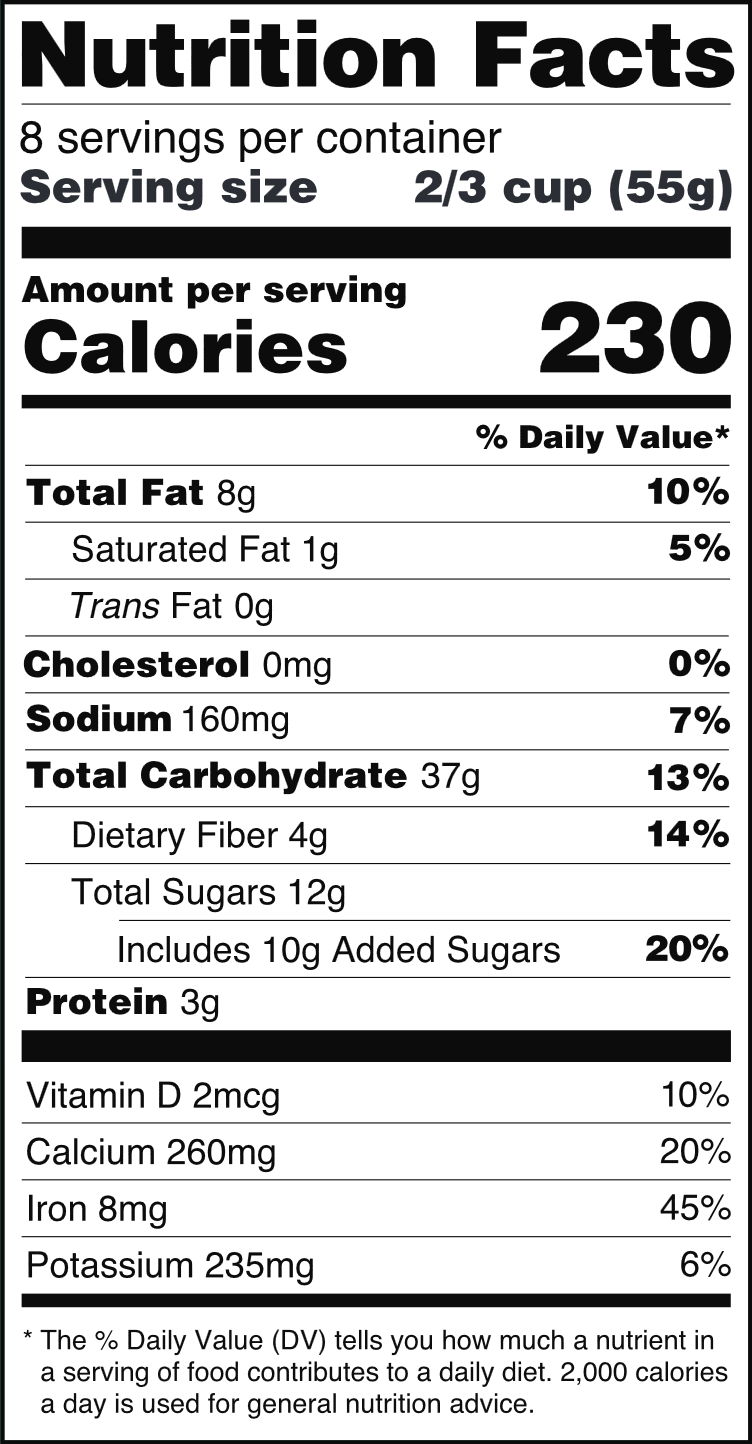
- Nutrition Facts panels list the serving size, Calories, nutrients per serving and a % Daily Value column. Since the 2016 revision, the required micronutrients are vitamin D, calcium, iron and potassium. Vitamins A and C became optional.
- Nutrient content claims have defined meanings: "fat free" is less than 0.5 g fat per serving; "low fat" is 3 g or less; "reduced" means at least 25% less than the regular product. That is why 2% milk is labeled "reduced fat".
- Allergen labeling requires milk to be declared, as described above.
Health benefits of dairy foods
Dairy foods deliver a lot of nutrients per Calorie: high-quality complete protein, calcium and phosphorus for bone, vitamin D (fortified), potassium, riboflavin and B12. Milk drinking during childhood and adolescence, when most bone mass is built, helps reach a higher peak bone mass, which lowers the risk of osteoporosis later. Potassium and calcium in dairy are linked with healthy blood pressure. Fermented dairy foods can supply live cultures, and yogurt is often well tolerated by people with lactose intolerance. Research is mixed on full-fat dairy and heart disease, which is why US guidelines currently recommend mostly low-fat and fat-free choices.
Dairy is not required for health: people who avoid it can get the same nutrients from fortified plant drinks, leafy greens, canned fish with bones and other foods. A balanced answer on a test names both the benefits and the alternatives.
Strategy
- Split the written test by topic. One partner takes chemistry (carbohydrates, lipids and esterification, proteins, cooking changes, emulsions, freezing point depression). The other takes nutrition and regulation (vitamins and RDAs, allergies and intolerance, milk types, labeling, pasteurization, probiotics, health benefits). Swap at the end to check each other.
- Plan the lab in advance. Decide who measures, who mixes and who shakes for each task. Ice cream and butter both need hard, continuous shaking; trade off every minute so the shaking does not slow down.
- Do the lab first if you can. Time on lab tasks is fixed by the procedure (draining takes 15 minutes, ice cream 5–10). Start the curd draining, then work on the test while it drains.
- Use both note sheets well. One sheet can hold the lab data from your notebook (best salt amount, acid drops for each milk, cream temperature), the scoring formulas and the freezing point depression equation. The other can hold the RDA table, the casein/whey table, milk standards and the allergy versus intolerance comparison.
- Pack a checklist. Goggles, lab coat or apron, the two bags, the lidded container, cheesecloth, whatever you want to use from the Chemistry Events Lab Equipment List, a thermometer if you prefer your own, and two calculators.
- Clean up completely. The cleanup penalty can be up to 10% of the total possible score, which is close to the full value of a curd or butter task.
Common pitfalls
How tournaments test this
Tests written to the 2027 dairy rules are not yet public. Our archive holds 1,650 Food Science questions from public tests in the 2018 and 2020–2022 seasons, written under earlier versions of the event that emphasized fermentation, metabolism and general food chemistry. Use them selectively. The shapes of the questions carry over even where the topics do not.
- Format. Half of the archived questions (50%) are free response, 32% multiple choice, 9% select-all, 6% true/false, 2% numeric and 1% matching. Expect a similar mix on dairy tests, with free-response "explain why" items where most points are lost.
- Overlap with 2027 topics. "Milk" appears in 166 questions across the archive and question bank, "protein" in 189 and "fat" in 175, and these, plus the sugar-structure, saturated-fat, emulsion, crystallization, allergen and labeling questions, are the most useful archive practice for 2027. Skip the archived questions on glycolysis, the citric acid cycle, yeast fermentation, pickling and soy sauce: they are outside the 2027 dairy scope.
- Task profile. Of archived questions, 9.6% are "which of the following", 8.1% "explain or why", 4.4% "calculate" and 2.7% "identify a structure in a figure". For 2027, expect structure identification (lactose, a triglyceride, a fatty acid), short calculations (%DV, Calories, freezing point depression, percent curd) and explanation questions on curdling, churning and pasteurization.
- Lab-linked questions. Because the tests are written for an event with dairy labs, expect questions that tie to the lab tasks: why salt is added to ice, why acid makes curds, why cream turns into butter.
Test yourself
These questions come from public tournament tests in our archive and were chosen because they fall inside the 2027 dairy topics. Click an answer to check it; each links to its full test. The explanations are ours.
- 1
Fructose is an example of aldose sugar.
Practice more Food Science questions →
- 1
What is the main purpose of adding polysaccharides when making ice cream?
Practice more Food Science questions →
References and further reading
- Goff, H. D., and Hartel, R. W., Ice Cream (7th ed., Springer, 2013): ice cream structure, partial coalescence, freezing point depression.
- University of Guelph, Dairy Science and Technology Education (H. D. Goff): milk composition, casein micelles, pasteurization, butter and ice cream: https://www.uoguelph.ca/foodscience/book-page/dairy-science-and-technology-ebook
- US FDA, Grade "A" Pasteurized Milk Ordinance (pasteurization times and temperatures): https://www.fda.gov/food/milk-guidance-documents-regulatory-information/national-conference-interstate-milk-shipments-ncims-model-documents
- Electronic Code of Federal Regulations, 21 CFR Part 131 (milk and cream standards) and Part 135 (frozen desserts): https://www.ecfr.gov/current/title-21/chapter-I/subchapter-B/part-131
- US FDA, Food Allergies (the nine major allergens and labeling): https://www.fda.gov/food/food-labeling-nutrition/food-allergies
- US FDA, The Nutrition Facts Label and Daily Values: https://www.fda.gov/food/nutrition-facts-label/daily-value-nutrition-facts-and-supplement-facts-labels
- NIH Office of Dietary Supplements, fact sheets for calcium, vitamin D, riboflavin, vitamin B12 and potassium (RDAs and deficiency): https://ods.od.nih.gov/factsheets/list-all/
- NIH MedlinePlus Genetics, Lactose intolerance: https://medlineplus.gov/genetics/condition/lactose-intolerance/
- USDA Agricultural Marketing Service, National Organic Program (pasture rule): https://www.ams.usda.gov/about-ams/programs-offices/national-organic-program
- OpenStax, Chemistry 2e, section 11.4 (colligative properties, freezing point depression): https://openstax.org/books/chemistry-2e/pages/11-4-colligative-properties
- SciOly Wiki, Food Science (another summary of the event): https://scioly.org/wiki/index.php/Food_Science
- Practice more: the Scio.ly test archive has public Food Science tests you can filter by subtopic.
Official references
Sample notesheet
Download a printable, rule-compliant sample notesheet. Customize with your notes.